
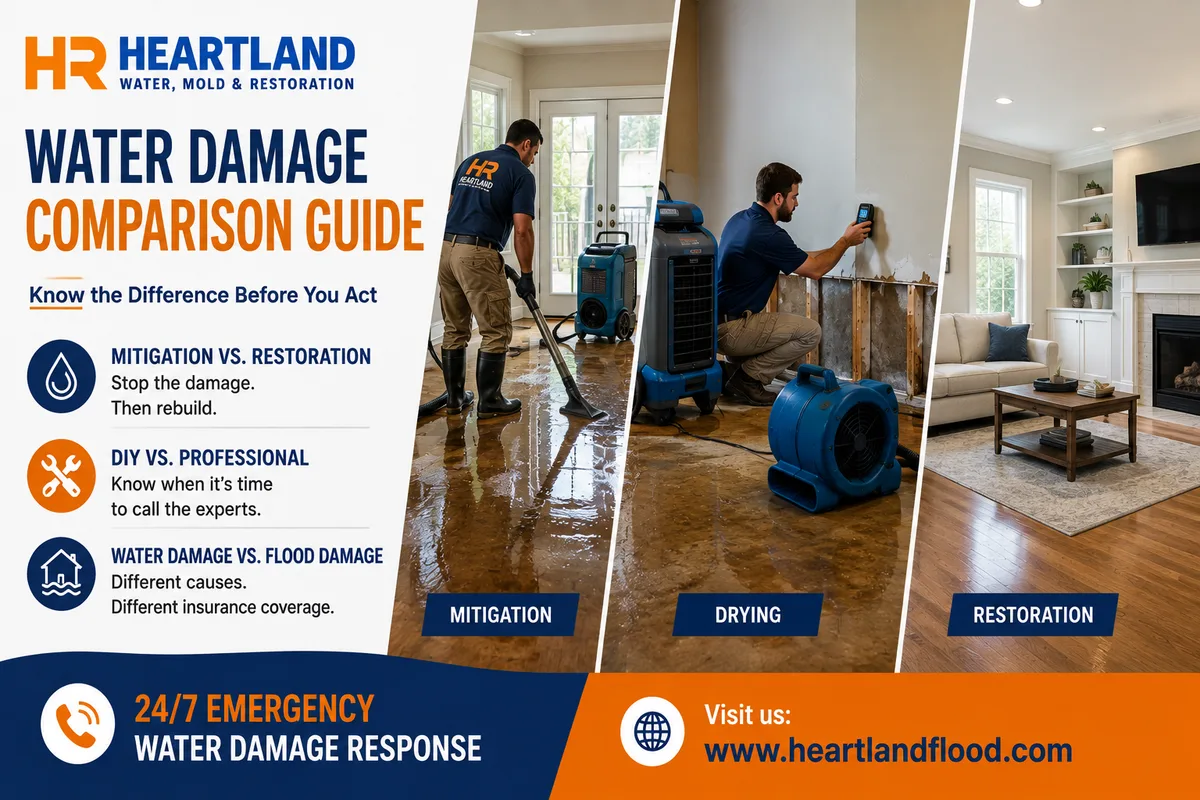
Quick answer: Mitigation is the emergency phase that stops damage and dries the structure, and restoration is the rebuild that follows. DIY works only for small, clean, quickly caught spills. For insurance, water damage is sudden and accidental water from inside the home, while flood damage is water from outside and usually needs a separate flood policy bought before the storm.
Water has a way of turning a normal Tuesday into a crisis. One burst pipe, one overflowing washing machine, one storm that pushes past your gutters, and you're standing in a puddle wondering what to do next.
Homeowners searching for answers usually run into the same confusing terms: mitigation, restoration, water damage, flood damage. They sound similar. They are not the same thing especially once insurance gets involved.
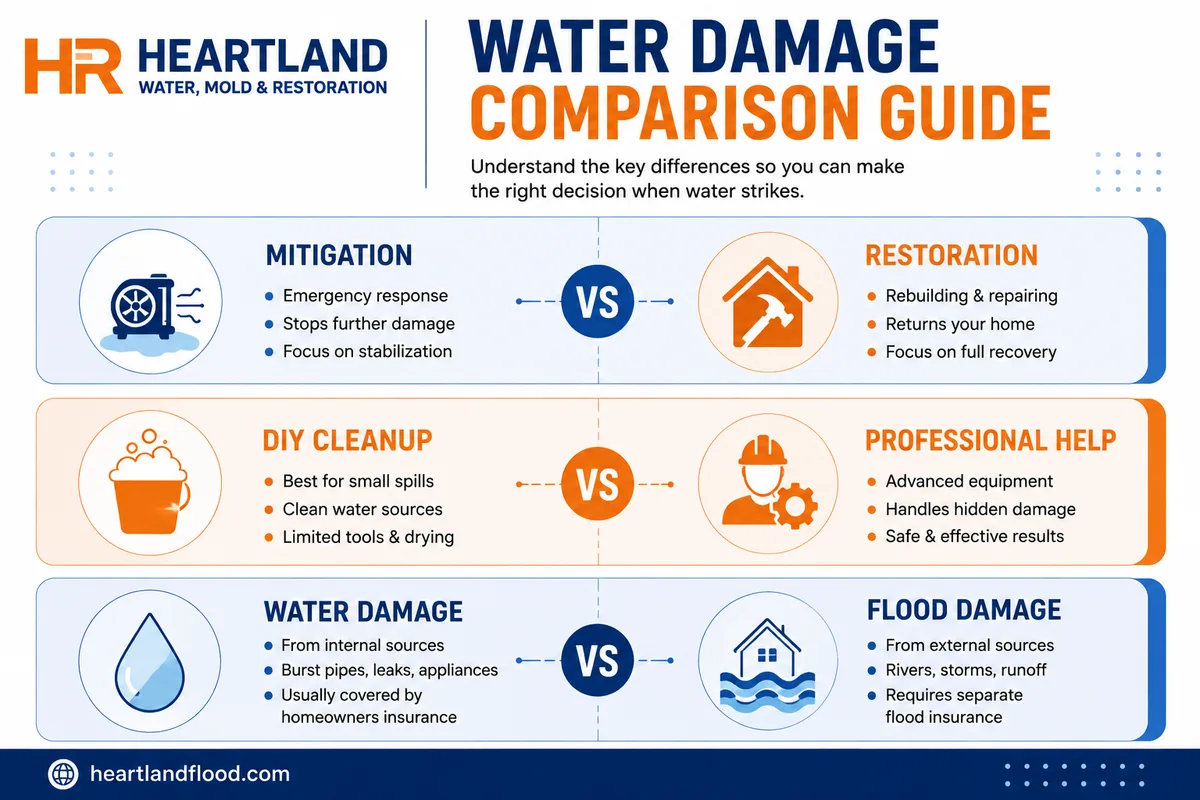
This guide breaks down three comparisons every homeowner should understand before disaster strikes:
- Mitigation vs. restoration
- DIY vs. professional help
- Water damage vs. flood damage (and why your insurance treats them differently)
Water Damage Mitigation vs. Restoration: Two Phases, One Goal
"Mitigation" and "restoration" get used interchangeably, but they describe two separate stages of recovery. Mixing them up can cost you time you don't have.
What Is Water Damage Mitigation?
Water damage mitigation is the emergency response phase. It happens in the first hours after water enters your home, and its only job is to stop things from getting worse.
Mitigation typically includes:
- Shutting off the water source
- Emergency water removal of standing water
- Setting up industrial air movers and dehumidifiers
- Removing materials that can't be saved (soaked padding, ruined drywall)
Think of it as triage. Nothing is being rebuilt yet - the goal is simply to stabilize the property so mold doesn't take hold and materials don't warp beyond repair.
What Is Water Damage Restoration?
Water damage restoration is the rebuilding phase that follows once the property is stabilized and fully dry. This is where the actual repair work happens.
Restoration typically includes:
- Replacing drywall and insulation
- Refinishing or replacing flooring
- Repainting and reinstalling trim
- Returning the space to its pre-loss condition
Why the Distinction Matters
Timing is everything. Mitigation needs to start within 24-48 hours to be effective. Wait longer, and you're no longer just dealing with wet materials, you're dealing with mold growth, warped subflooring, and demolition instead of drying.
This is why water damage restoration Kansas City homeowners rely on is usually structured as one continuous process, with mitigation first and restoration second, handled by the same crew. Heartland Restoration treats these as a single coordinated response rather than two separate jobs handed off between companies - which matters, because a restoration team that didn't handle the original mitigation may not know how deep the moisture actually traveled.
DIY vs. Professional Water Damage Cleanup
Every homeowner has stood over a wet carpet with a shop vac, wondering if they can just handle it themselves. Sometimes, yes. Often, no. The line comes down to three factors: how much water, where it came from, and how much time has passed.
When DIY Water Damage Cleanup Makes Sense
Small, contained spills are often manageable without a professional:
- A dishwasher leak caught within the hour
- A minor sink overflow with clean water
- An area you can fully dry within 24-48 hours
If the water is clean, not from a sewage backup or outside flooding - basic water damage cleanup with towels, a wet/dry vacuum, and fans pointed at the area is usually enough.
When You Need a Professional Water Damage Company
The math changes once water has been sitting more than a day, has soaked into padding, traveled under flooring, or reached drywall and insulation. Call in professionals when you're dealing with:
- Water that's been standing for more than 24 hours
- Contaminated water from a sewer backup, sump pump failure, or storm runoff
- Sagging or bubbling ceilings
- Electrical systems near standing water
- Flooring or walls that feel dry on the surface but stay damp underneath
Homeowners consistently underestimate hidden moisture. A floor can feel dry while the subfloor underneath is still saturated and without professional moisture meters, that hidden water becomes the seed of a mold problem two or three weeks later.
The Equipment Gap
Retail box fans and consumer dehumidifiers move a fraction of the air that commercial equipment does. A professional setup can dry a room in two to three days. A homeowner using store-bought equipment might take two weeks - plenty of time for mold to establish itself inside wall cavities.
For anything beyond a small, immediately-caught spill, hiring a water damage company typically costs less than the mold remediation project that follows a slow DIY dry-out.
Water Damage vs. Flood Damage: Why Your Insurance Cares
This comparison trips up more homeowners than any other, because the terms sound nearly identical but determine whether a claim gets paid or denied.
Water damage and flood damage are not interchangeable in the insurance world. They're two different categories of loss, covered by two different types of policies.
What Counts as Water Damage
Standard homeowners insurance generally covers water damage that's sudden, accidental, and originates inside the home, such as:
- A burst pipe
- A failed water heater
- An overflowing bathtub or washing machine hose
- A roof leak that lets storm water into the attic
Most residential water claims fall into this category, which is why standard policies are built to handle it.
What Counts as Flood Damage
Flood damage is legally defined as water that comes from outside the home and affects two or more acres or two or more properties. Examples include:
- Rising rivers or creeks
- Storm surge
- Flash flooding after heavy rain
- Groundwater entering through the foundation
Here's the catch: standard homeowners insurance almost always excludes this category. Flood coverage requires a separate policy through the National Flood Insurance Program or a private carrier purchased before the water shows up. A policy bought after a storm is forecast won't cover that storm.
Same Storm, Two Different Outcomes
Picture two Kansas City basements flooding during the same overnight storm:
- Basement A floods because a nearby creek overflowed its banks → classified as flood damage, not covered without a separate flood policy.
- Basement B floods because a sump pump failed during the storm → may be covered under a standard policy, depending on sump pump or sewer backup riders.
Same weather event, completely different financial outcome. Homeowners in flood-prone parts of the Kansas City metro should confirm with their agent whether their policy includes flood coverage, sewer backup coverage, or both - "I have homeowners insurance" isn't the same as "I'm covered for this specific type of water event."
A reliable flood damage restoration provider documents the water source carefully: photos, moisture readings, and origin notes, because that documentation often becomes part of the insurance claim itself.
Putting It All Together: A Real-World Example
A Kansas City homeowner comes home to two inches of standing water in the basement after an overnight storm. Here's how the three comparisons play out in sequence:
1. Coverage first. Did the water come from a failed sump pump inside the home (likely a standard water damage claim), or from groundwater and surface runoff entering through the foundation (likely flood damage, requiring separate coverage)? This answer shapes everything else.
2. Mitigation, then restoration. Within hours, the priority is extraction and drying - not rebuilding. Only once the space is fully dry and moisture-tested does restoration begin: new drywall, flooring, and paint.
3. DIY or professional. Two inches of standing water sitting for hours is well past shop-vac territory. This calls for extraction pumps, industrial air movers, and moisture meters that can find water hiding behind baseboards long after the surface looks dry.
The Takeaway for Kansas City Homeowners
Understanding these three distinctions before disaster strikes puts you in a much stronger position when it does:
- Call for emergency water removal immediately rather than waiting to see if it dries on its own
- Know the difference between a job you can safely handle and one that needs commercial equipment
- Ask the right questions about your policy before assuming a loss is automatically covered
Heartland Restoration works with Kansas City homeowners through every stage of this process from the first emergency call, through mitigation and drying, into full restoration, with documentation that supports the insurance claim along the way. Whether the water in your home came from a burst pipe on a Tuesday afternoon or a flooded creek after a spring storm, knowing which category you're in, and acting on it quickly is what separates a manageable repair from a much bigger rebuild.
Related Reading
Last updated October 22, 2026
Frequently Asked Questions About Water Damage Terms and Coverage
What is the difference between water damage mitigation and restoration?
Mitigation is the emergency phase in the first hours: stopping the source, removing standing water, setting air movers and dehumidifiers, and removing materials that cannot be saved. Restoration is the rebuild afterward: replacing drywall and insulation, refinishing flooring, repainting, and returning the space to its pre-loss condition.
How soon should water damage mitigation start?
Mitigation should begin within 24 to 48 hours to be effective. After that, wet materials are more likely to develop mold, subflooring can warp, and the job shifts from drying to demolition. Starting within hours, as soon as the source is stopped and it is safe, limits the scope of the rebuild.
When is DIY water damage cleanup enough?
DIY is usually enough for small, contained spills of clean water, such as a dishwasher leak caught within the hour or a minor sink overflow, that you can fully dry within 24 to 48 hours with towels, a wet and dry vacuum, and fans. Water that is contaminated or has reached drywall or padding needs professionals.
What counts as flood damage for insurance purposes?
Flood damage generally means water from outside the home affecting two or more acres or two or more properties, such as rising rivers or creeks, storm surge, flash flooding, or groundwater entering through the foundation. Standard homeowners policies almost always exclude it, so a separate flood policy is needed.
Is a failed sump pump covered by homeowners insurance?
It may be, but it depends on the policy. Water from a failed sump pump originates inside the home and may be covered under a standard policy, while many policies require a sump pump or sewer backup endorsement. Ask your agent which coverages you actually carry before the next storm.
Why does the water source matter to my claim?
Insurers treat water damage and flood damage as different categories of loss under different policies, so documenting the source with photos, moisture readings, and origin notes can decide whether a claim is paid. Two basements flooded in the same storm can have different outcomes depending on how the water entered.
Sources & References
- National Flood Insurance Program - Flood Insurance & Recovery Guidance - FEMA (Federal Emergency Management Agency)
- National Weather Service Flood Safety - NOAA National Weather Service
- ANSI/IICRC S500 Standard for Professional Water Damage Restoration - IICRC (Institute of Inspection, Cleaning and Restoration Certification)
Comments
No comments yet.