
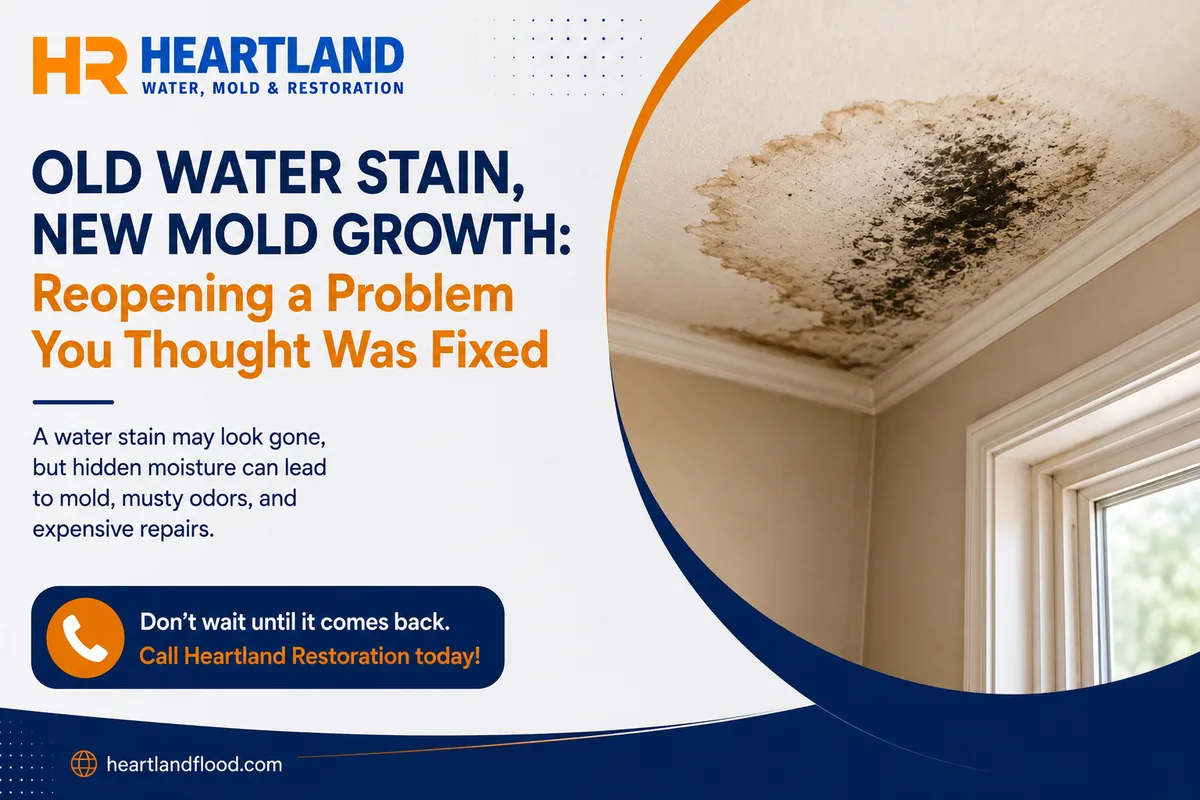
Quick answer: A water stain that returns after repainting almost always means the moisture underneath was never fully dried. Paint hides moisture rather than removing it, so damp framing, insulation, or subfloor can restart mold growth within 24 to 48 hours. Do not repaint again. Trace the moisture source with a moisture meter and thermal imaging, then dry or replace the affected materials.
A water stain on the ceiling has a way of fading from memory faster than it fades from the drywall. You caught it early, dried it out, maybe even repainted over it, and moved on with life. Then, months or even a year later, a familiar musty smell creeps back into the room. This time there's a soft, dark ring spreading again, except now it isn't just a stain. It's active mold growth, and it's growing in a spot you thought was handled for good.
This scenario is one of the most common callbacks in the restoration industry, and it almost always traces back to the same root cause: the visible water was dried, but the moisture underneath it never truly was. Understanding why old stains reopen, what's actually happening behind your walls, and how to respond the right way can save you from a much larger repair bill down the road.
Why a "Fixed" Water Stain Rarely Means the Problem Is Solved
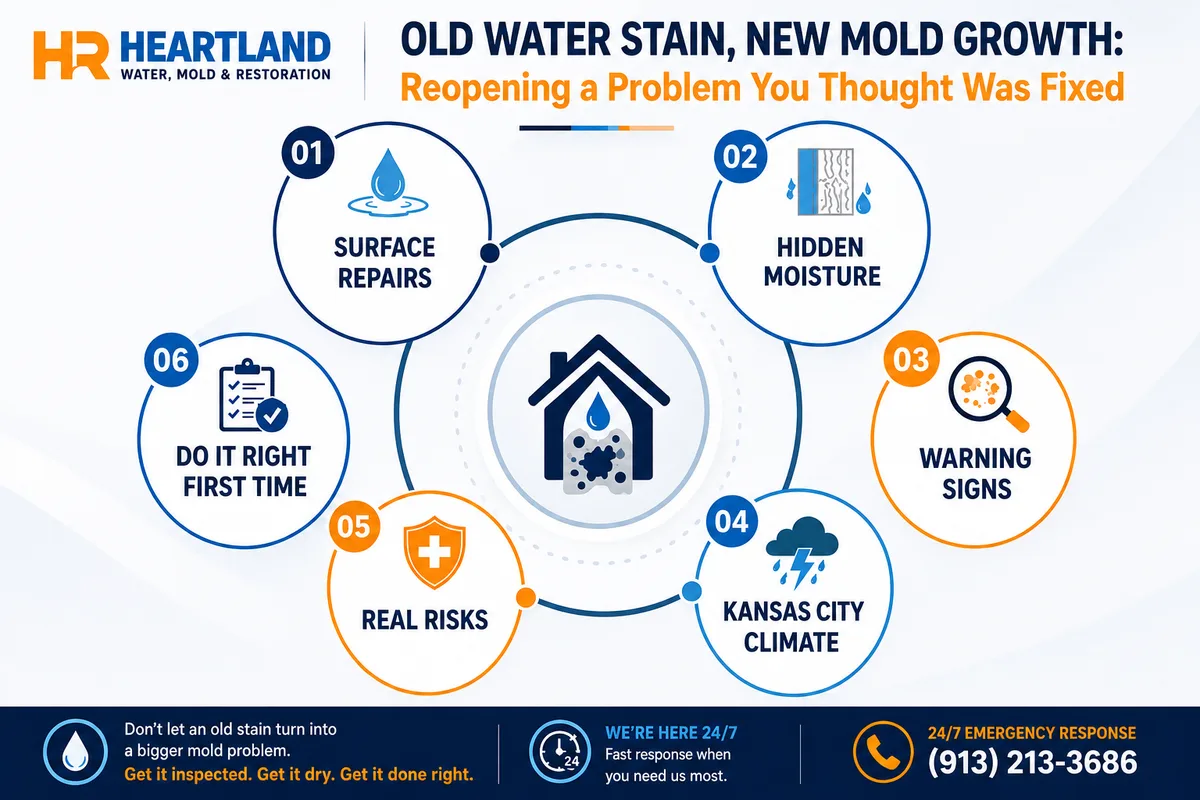
When most homeowners deal with a water stain, the process looks something like this: wipe down the surface, let it air dry for a few days, apply a stain-blocking primer, and repaint. It looks clean. It looks finished. But paint and primer don't remove moisture, they just hide it. If the framing, insulation, or subfloor underneath that stain didn't fully dry, you've essentially sealed a damp environment behind a fresh coat of paint, which is close to ideal conditions for mold to establish itself.
Cosmetic Repair vs Real Water Damage Restoration
There's an important distinction between patching a stain and completing proper water damage restoration. Cosmetic repair addresses what you can see. Restoration addresses what caused the damage in the first place and confirms the affected materials are actually dry before anything gets closed back up.
- Cosmetic repair typically involves surface cleaning, painting, or replacing a small section of drywall.
- Structural drying uses moisture meters, thermal imaging, and industrial air movers to confirm materials are dry all the way through, not just on the surface.
- Without moisture readings taken over several days, there's no reliable way to know if a repair actually solved the underlying issue.
How Mold Reopens Old Water-Damaged Areas
Mold spores are present in virtually every home already; they're part of the natural environment. What determines whether they stay dormant or start colonizing is moisture. Old water-damaged areas are especially vulnerable because the materials involved, drywall paper, wood framing, insulation, and subfloor, are often still holding residual dampness long after the surface looks dry.
Hidden Moisture Pockets Behind Drywall, Insulation, and Subfloors
A wall can feel bone-dry to the touch while insulation just an inch behind it is still holding onto moisture from a leak that happened last spring. Insulation in particular is notorious for trapping water and releasing it slowly, which creates a long, low-grade damp environment that's practically an invitation for mold colonization. Subfloors under old stains behave the same way, especially in homes with hardwood or laminate flooring where moisture has nowhere to evaporate quickly.
Warning Signs the Old Stain Is Active Again
Reactivated water damage doesn't always announce itself with an obvious mold patch. Watch for these signals:
- A musty or earthy odor near the original stain location, especially after humid weather
- The stain's edges appear darker, fuzzier, or slightly raised compared to before
- Paint that's bubbling, peeling, or developing a soft texture
- New small spots appearing near the old water stain boundary
- Increased allergy symptoms, coughing, or headaches when spending time in that room
- A slightly soft or spongy feel when you press on nearby drywall or trim
Why Kansas City Homes Are Especially Prone to Repeat Mold Growth
Local climate plays a bigger role in mold recurrence than most homeowners realize. Kansas City's mix of humid summers, heavy spring storms, and freeze-thaw winters creates repeated stress on the same vulnerable areas of a home year after year.
- Humid summer months keep indoor moisture levels elevated for weeks at a time, slowing the drying process for any lingering dampness
- Spring and early summer storm systems frequently produce the roof leaks and basement seepage that cause the original stain
- Freeze-thaw cycles in winter can reopen small cracks in roofing, flashing, or foundations that were never fully sealed
- Older housing stock throughout the Kansas City metro often has outdated insulation and ventilation that traps moisture longer than modern building materials
This local pattern is exactly why local water damage restoration and mold inspection services matter more here than a generic online guide can capture. A home in a dry, low-humidity climate faces a very different risk profile than one in the Midwest's humid continental zone.
The Real Risks of Reactivated Mold Growth
Health Risks
Indoor mold exposure has been linked to respiratory irritation, worsened asthma and allergy symptoms, and persistent headaches or fatigue in sensitive individuals. Reactivated mold behind walls is particularly concerning because it can circulate spores through your home's air system long before it becomes visible on the surface.
Structural Risks
Left unaddressed, recurring moisture doesn't just feed mold, it also breaks down wood framing, weakens drywall, and can eventually compromise the structural integrity of ceilings, subfloors, or load-bearing walls. What starts as a $200 patch job can turn into a five-figure structural repair if the moisture source keeps cycling through the same materials for years.
What To Do the Moment You Spot a Returning Stain
Speed matters. The longer moisture sits, the more surface area mold has to establish itself and spread into adjoining materials. As soon as you notice discoloration, odor, or texture changes near an old repair, it's worth pausing before reaching for the paint roller again.
DIY Response vs Professional Mold Remediation
Small, isolated surface mold on a non-porous material can sometimes be cleaned with household products. But once mold has reached porous materials like drywall, insulation, or wood framing, cleaning the surface does nothing for what's growing underneath, and it can actually make things worse by disturbing spores and pushing them deeper into the material or into your air supply.
- DIY-appropriate: small, hard-surface mold spots under roughly 10 square feet with no history of recurring moisture
- Professional mold remediation needed: any recurrence of a previously repaired stain, musty odors without a visible source, or mold behind drywall, insulation, or flooring
- A professional mold inspection identifies the moisture source itself, not just the mold it produced, which is the only way to prevent a third occurrence
This is usually the moment where a phone call saves far more than it costs. Getting a professional opinion here breaks the cycle of surface patches that never solve the underlying moisture problem in the first place.
How Restoration Handles Reopened Water Damage Cases
When a homeowner calls about a stain that's come back, the first step isn't repainting, it's investigation. Heartland Restoration approaches these cases by tracing the moisture back to its source using moisture meters and thermal imaging, rather than treating the visible mold as an isolated problem. Materials that retained moisture the first time around are removed and replaced, not just cleaned, and the area is verified as fully dry before any cosmetic work begins. That distinction, treating the cause instead of the symptom, is usually what separates a permanent fix from a repeat service call eighteen months later.
Preventing a Second Round: Long-Term Moisture Control
Stopping mold from returning a second time comes down to controlling humidity and catching new moisture intrusion early, before it has time to soak into building materials.
- Keep indoor humidity levels below 50%, using a dehumidifier in basements or historically damp rooms during summer months
- Inspect roofing, flashing, and gutters each spring and fall, since small leaks are the most common source of repeat staining
- Improve ventilation in bathrooms, kitchens, and laundry areas where daily moisture builds up quickly
- Schedule a mold inspection any time you notice a returning odor, even without a visible stain
- Consider a moisture barrier or improved grading around the foundation if basement dampness is a recurring issue
None of these steps require major renovation, but together they remove the conditions mold needs to take hold in the first place. Homeowners who pair a proper initial repair with these ongoing habits rarely see the same stain reappear a second time.
An old stain that's showing signs of life again isn't something to sit on. Reach out to a local water damage restoration team before it spreads further into your walls or subfloor, since the fix only gets more involved the longer it's ignored. Heartland Restoration offers inspections that identify the real cause behind recurring stains, so the next repair is the last one you need.
Related Reading
Last updated September 3, 2026
Frequently Asked Questions About Returning Water Stains and Mold
Can mold grow back in the exact same spot after a repair?
Yes. If residual moisture stayed in the framing, insulation, or subfloor after the original repair, mold can recolonize the same area. Paint and primer only cover the surface. The repair works only when the materials are confirmed dry through moisture readings and the original leak source has been fixed.
How long does it take for mold to reappear after a water leak?
Mold can start within 24 to 48 hours once trapped moisture reaches the right humidity and temperature, though it may stay hidden inside a wall for weeks or months before you see or smell it. A returning stain months later usually reflects moisture that was never fully removed.
Is a returning water stain always a sign of mold?
Not always, but darkening, a musty odor, fuzzy edges, or a soft texture near an old stain usually points to active moisture and possible mold. A moisture meter and thermal imaging can confirm whether the area is wet, and a mold inspection can confirm whether growth is present behind the surface.
Can I just repaint over a returning stain?
Repainting hides the symptom briefly but does not remove the moisture causing it, and it can seal dampness behind a fresh coat of paint. A better first step is to stop, test the area for moisture, and find the source, because covering it again usually leads to a larger repair later.
What is the difference between mold remediation and mold removal?
Remediation addresses the moisture source and contains the problem, removes affected porous materials, and verifies the area is dry. Removal alone, such as wiping or spraying visible mold, often leaves the conditions for regrowth in place. Remediation is the approach that prevents a repeat.
Does homeowners insurance cover repeat mold damage?
Coverage varies by policy and often depends on whether the recurrence comes from a new covered event or an unresolved earlier loss. Mold exclusions can be strict, so report problems promptly, keep records of the original repair, and ask your insurer or agent how your specific policy treats mold.
Is it safe to stay in the home with reactivated mold?
Small, contained areas are typically low risk in the short term, but mold behind walls can circulate spores through the home, and sensitive people with asthma or allergies should limit exposure until it is professionally assessed. Seek medical advice for persistent symptoms.
Sources & References
- A Brief Guide to Mold, Moisture and Your Home - U.S. Environmental Protection Agency
- Mold - Centers for Disease Control and Prevention
- ANSI/IICRC S500 Standard for Professional Water Damage Restoration - IICRC (Institute of Inspection, Cleaning and Restoration Certification)
Comments
No comments yet.