
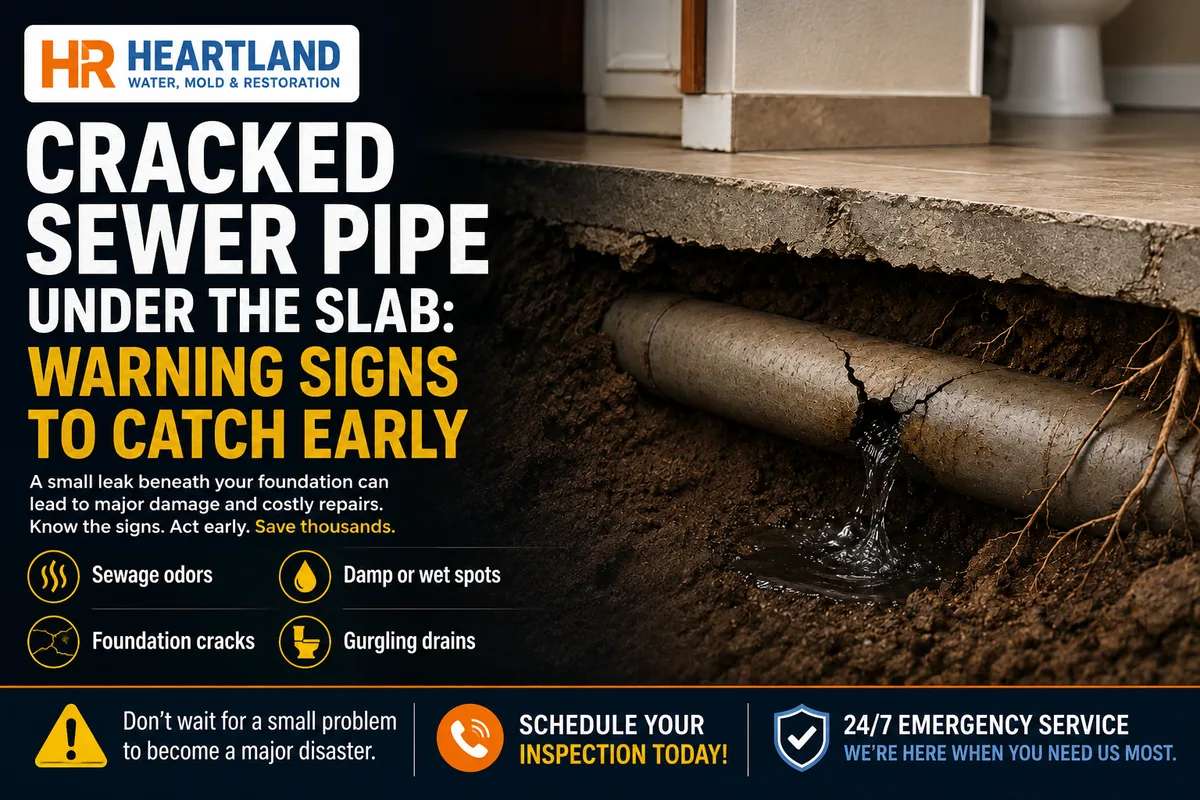
Quick answer: Early signs of a cracked sewer pipe under a slab include damp flooring that will not dry, a persistent sewage or musty odor, mold with no visible plumbing source, new cracks in walls or floors, soft spots in the yard, gurgling drains, and repeated backups. Call a licensed plumber for a sewer camera inspection, and a water damage specialist if leaking has already reached the home.
A home built on a concrete slab hides a lot of its plumbing from view. That's convenient right up until something goes wrong beneath your feet. A cracked sewer pipe under slab is one of those problems that rarely announces itself with a bang. Instead, it whispers through small clues, a musty smell here, a soft patch of flooring there, long before it becomes a full-blown emergency involving jackhammers and torn-up floors.
This is a common concern for homes across the Kansas City metro, where older housing stock and clay-heavy soil create ideal conditions for slab plumbing problems. Homeowners who understand the early warning signs can save thousands of dollars and weeks of disruption. This guide walks through exactly what to watch for, why it happens, and what steps to take the moment you suspect trouble underneath your home's foundation.
Sewer Line Leaks vs Water Supply Slab Leaks
Before getting into symptoms, it's worth clarifying a distinction that matters. A cracked sewer pipe is part of your drain and waste system. It's gravity-fed and carries wastewater away from the home, so it isn't under constant pressure. A water supply slab leak, by contrast, involves a pressurized line and behaves differently, often showing up as a hissing sound or an unexplained jump in your water bill. This article focuses specifically on sewer line symptoms, since mixing the two can lead homeowners to misdiagnose the problem or call in the wrong type of repair.
Why Slab Sewer Pipes Crack in the First Place
Pipes buried in or under a concrete slab don't fail randomly. There's almost always a mechanical or environmental cause behind it, and in the Kansas City area, soil conditions play a bigger role than most homeowners realize.
Common Causes of Pipe Damage
- Soil shifting - expansive clay soils, common throughout Kansas City, KS and Kansas City, MO, swell when wet and shrink when dry, putting constant pressure on rigid pipe joints
- Pipe age and material - older cast iron or Orangeburg pipes corrode and deteriorate faster than modern PVC
- Tree root intrusion - roots seek out moisture and can infiltrate even hairline cracks, gradually widening them
- Poor original installation - improper slope, inadequate bedding material, or rushed joint connections create weak points
- Ground settling - uneven settling after construction can stress pipe joints that were never designed to flex
Understanding the root cause matters because it shapes the repair approach. A pipe cracked from root intrusion needs a different fix than one damaged by soil movement, and a plumbing inspection early on can pinpoint exactly which factor is at play in your home.
Early Warning Signs You Should Never Ignore
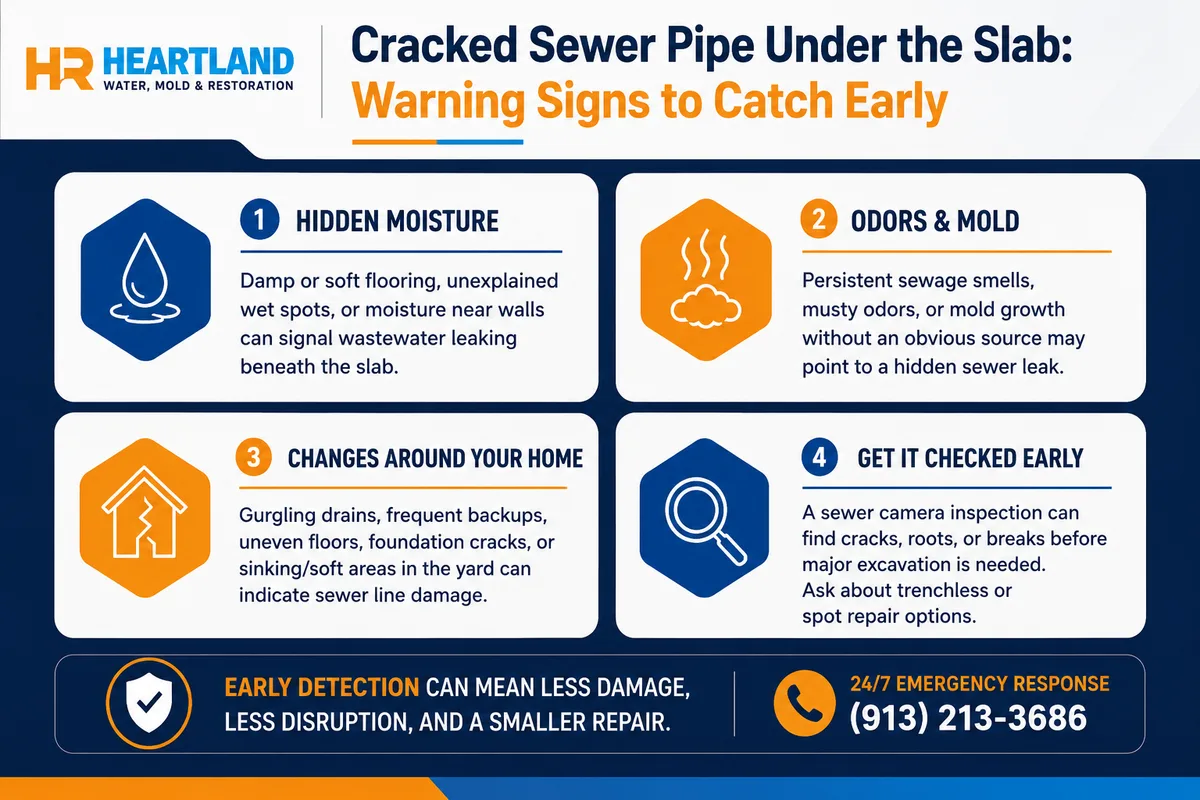
This is the part that matters most. Catching a sewer line crack in its early stages is the difference between a targeted repair and a full sewer line repair project involving major excavation.
1. Unexplained Wet or Damp Spots on Flooring
If you notice a patch of carpet that stays damp no matter how many times you dry it, or tile that feels cool and slightly spongy underfoot, this is often the first physical clue. Wastewater finding its way up through a crack in the slab will follow the path of least resistance, sometimes surfacing several feet away from the actual pipe damage. Unlike a clean supply leak, this moisture is often accompanied by odor.
2. A Persistent Musty or Sewage Odor
A cracked sewer line releases gas and moisture into the surrounding soil and, eventually, into your living space. If you catch a whiff of something unpleasant near a bathroom, laundry room, or kitchen and it doesn't go away with cleaning, that's a strong signal something is leaking beneath the floor.
3. Mold or Mildew Growth Without an Obvious Source
Mold needs moisture to thrive. When it shows up along baseboards, in corners, or behind furniture with no visible plumbing nearby, the source is frequently hidden beneath the slab. This is one of the more serious signs, since prolonged exposure can turn into a mold remediation issue on top of the original plumbing repair.
4. Cracks Appearing in the Foundation or Walls
- Hairline cracks spreading across drywall
- New gaps forming around door frames or window trim
- Uneven or sloping floors in one section of the home
These structural symptoms often develop because wastewater escaping from a broken pipe erodes the soil supporting the slab, causing it to settle unevenly. This is sometimes called foundation settlement, and it's a red flag that shouldn't be dismissed as normal aging, particularly in older neighborhoods around Overland Park and Olathe where slab homes have had decades to shift.
5. Soft or Sinking Spots in the Yard Above the Buried Line
Because a cracked sewer pipe leaks wastewater into the surrounding soil, the ground directly above or near the line can start to erode from underneath. Watch for small depressions, soft patches that stay muddy longer than the rest of the yard, or grass that looks unusually lush in one narrow strip. Sewage acts a bit like fertilizer, so that suspiciously healthy patch of grass near the foundation is a legitimate clue, not just an old wives' tale.
6. Gurgling Toilets or Drains Even When Not in Use
Walk through your home and listen at the drains and toilets. Gurgling or bubbling sounds when nothing is running usually means air is escaping or being drawn in through a break in the line, disrupting the normal airflow in your drain and vent system. This is different from the hissing sound associated with a pressurized supply leak, and it's one of the more reliable sewer-specific indicators.
7. Slow Drains or Frequent Backups
- Toilets that gurgle when the washing machine drains
- Multiple drains backing up at the same time
- Sewage odor coming from drains rather than the floor itself
When several fixtures throughout the house act up simultaneously, it usually points to a main line issue rather than an isolated clog.
8. Increased Insect Activity Near Drains or Cleanouts
Drain flies, small gnats, or an uptick in pests near floor drains and outdoor cleanouts can indicate a sewer gas leak or standing wastewater attracting them. It's a less obvious sign, but one worth mentioning to a technician during an inspection.
How Professionals Diagnose a Cracked Slab Sewer Line
Once warning signs appear, guessing isn't a strategy. Professional diagnosis typically starts with a sewer camera inspection and moves from there based on what the camera shows:
- Video camera inspection - a flexible camera is fed through the line to visually locate cracks, breaks, or root intrusion, and is usually the first step before anything else
- Hydrostatic testing - the line is filled and sealed to check whether the water level holds steady, most often used to confirm a repair or new installation rather than as the first diagnostic step
- Acoustic leak detection - specialized listening equipment helps pinpoint the location of a leak when the camera alone doesn't give a clear answer
- Dye testing - colored dye is introduced into the system to trace where wastewater is escaping, particularly useful when a leak surfaces away from the actual break
These methods let a technician identify the precise location and severity of the damage before any repair work begins, which keeps costs and disruption to a minimum. Many licensed plumbers serving the Kansas City area offer camera inspections as a standalone service, which is a smart first step even if you're not fully certain there's a problem yet.
Repair Options When a Crack Is Confirmed
Not every cracked pipe requires tearing out the entire slab. Depending on the diagnosis, several repair methods are available, and the right choice depends on how much of the pipe is affected.
Trenchless Pipe Repair
This modern approach, sometimes called pipe relining or pipe bursting, allows technicians to repair or replace damaged sections without breaking through the concrete slab at all. A resin-coated liner is inserted into the existing pipe and cured in place, creating a new, seamless pipe within the old one. Trenchless sewer repair works best when the existing pipe still has enough structural integrity to support a liner and when there's reasonable access to an entry point, such as a cleanout.
Traditional Slab Penetration
In cases where trenchless methods aren't suitable, often due to severe pipe collapse, extensive root damage, or misaligned sections, a portion of the slab is cut open to access and replace the damaged pipe directly. This is more invasive and typically costs more, but it's sometimes the only reliable option when the pipe has deteriorated beyond what a liner can support.
Spot Repair
If the damage is isolated to a small section, a spot repair targets only that segment rather than replacing the entire line. This can significantly reduce both cost and repair time, and it's often the first option a technician will explore after a camera inspection narrows down the problem area.
Choosing between these methods depends on pipe material, age, extent of damage, and the layout of the home, all things a qualified inspection will reveal. A good rule of thumb: if the damage is confined to one section and the rest of the pipe is sound, ask specifically whether trenchless repair or spot repair is an option before agreeing to full excavation.
Preventing Future Slab Pipe Problems
While not every pipe failure can be avoided, several habits reduce the risk significantly.
- Schedule a sewer camera inspection every few years, especially in homes over 20 years old or those built before PVC became standard
- Avoid planting trees with aggressive root systems, like willows or silver maples, near sewer lines
- Be mindful of what goes down drains, since grease, wipes, and food scraps accelerate wear and stress aging pipe joints
- Address minor plumbing issues right away rather than waiting for them to worsen
- Keep gutters and downspouts directing water away from the foundation, since saturated soil around the slab accelerates shifting
- If your home sits on expansive clay soil, common in parts of Lenexa and the wider Kansas City metro, consider asking a plumber about soil stabilization or French drain options during your next inspection
Consistent maintenance is far cheaper than emergency repair, and it gives homeowners confidence that their plumbing system is functioning as it should.
What to Do the Moment You Suspect a Problem
If you've spotted even one or two of the warning signs above, don't wait for the situation to worsen. Here's a simple action plan:
- Document what you're noticing with photos of damp spots, cracks, or discoloration
- Avoid using drain cleaners or chemical treatments, which can mask symptoms without fixing the cause
- Contact a licensed plumber for a camera inspection before assuming the worst
- If water damage has already appeared, bring in a water damage restoration specialist, such as Heartland Restoration, alongside the plumber
- Get a written estimate and ask directly whether trenchless repair is an option before committing to major work
Acting early on sewer line symptoms almost always results in a smaller, more affordable fix. Waiting tends to compound both the hidden water damage and the structural risk to your home.
Protecting Your Home Starts With Catching These Signs Early
A cracked sewer pipe under the slab is one of the more stressful plumbing problems a homeowner can face, mostly because it's invisible until it isn't. But the signs are there long before the situation becomes serious: damp flooring, odd smells, mysterious cracks, and unusual patches in the yard are your home's way of asking for attention. Paying attention to these details and acting quickly when something feels off can prevent a much larger, costlier sewer line repair down the road.
If you're in the Kansas City area and already seeing signs of water intrusion, mold, or damage from a slab leak, Heartland Restoration can assess the full scope of the damage and coordinate the drying and repair process properly, rather than just addressing what's visible on the surface. Whether it's drying out subflooring, handling mold growth, or restoring areas affected by a slab leak or a season of heavy storm damage, having an experienced local team involved early makes the recovery process far less stressful.
Related Reading
Last updated September 13, 2026
Frequently Asked Questions About Cracked Sewer Pipes Under a Slab
How do I know if my sewer pipe is cracked under the slab?
Common signs are damp or spongy flooring that does not dry, a persistent musty or sewage odor, mold with no obvious source, new cracks in walls or floors, soft patches in the yard, gurgling drains, and repeated backups. A sewer camera inspection by a licensed plumber is the reliable way to confirm a crack and locate it.
Is a cracked slab sewer pipe a plumbing emergency?
Treat it urgently. A leaking sewer line carries wastewater into the soil and sometimes up into the home, which can cause mold, odors, and soil erosion that lets the slab settle. Contact a licensed plumber promptly, avoid chemical drain cleaners, and call water damage help if moisture has already reached the house.
Can a cracked sewer pipe be fixed without breaking the slab?
Often, yes. Trenchless methods such as pipe relining insert a resin-coated liner that cures inside the old pipe, and spot repair fixes only a damaged section. They work best when the pipe still has structural integrity and there is access through a cleanout. Severe collapse or misalignment may still require opening the slab.
What causes pipes under a slab to crack?
Typical causes are shifting expansive clay soil, pipe age and material such as corroded cast iron or Orangeburg, tree roots entering hairline cracks, poor original installation such as bad slope or bedding, and uneven ground settling that stresses joints. Identifying the cause helps determine the right repair.
How often should I get a sewer camera inspection?
Every two to three years is a reasonable interval, especially for homes more than 20 years old or built before PVC pipe became standard. An inspection is also smart after any warning sign, before buying a home, or when tree roots are growing near the line.
Can a cracked sewer pipe cause foundation damage?
Yes. Wastewater escaping from a broken pipe can wash away the soil that supports the slab, leading to uneven settling, new cracks in walls, gaps around door frames, and sloping floors. These structural signs are a red flag and should be assessed promptly rather than dismissed as normal aging.
Who should I call for a sewer line leak under my house?
Call a licensed plumber for diagnosis and repair of the pipe itself. If the leak has already caused damp flooring, odors, mold, or sewage in the home, also bring in a sewage cleanup and water damage restoration team to dry, decontaminate, and document the damage alongside the plumbing repair.
Sources & References
- ANSI/IICRC S500 Standard for Professional Water Damage Restoration - IICRC (Institute of Inspection, Cleaning and Restoration Certification)
- Mold - Centers for Disease Control and Prevention
- A Brief Guide to Mold, Moisture and Your Home - U.S. Environmental Protection Agency
Comments
No comments yet.