

Quick answer: Get ready for Kansas City spring flooding before the storms arrive: test the sump pump and add a battery backup, clear gutters and downspouts, regrade soil away from the foundation, and move valuables off basement floors. If water still gets in, extraction and structural drying within 24 to 48 hours is what prevents mold.
Spring in Kansas City often brings heavy rain, melting snow, and rising groundwater, increasing the risk of flooding for homes and businesses. The challenge is that water damage rarely starts in obvious ways. Moisture can spread beneath floors, behind walls, and along foundations before visible signs appear.
When this hidden moisture goes unaddressed, damage can escalate quickly. Many property owners delay calling for water damage restoration in Kansas City, MO, only to discover that repair costs and disruption have grown significantly. Early water mitigation helps limit moisture spread, protect structural materials, and reduce long-term damage as the 2026 spring season approaches.
Why Spring Flooding Is Common in Kansas City
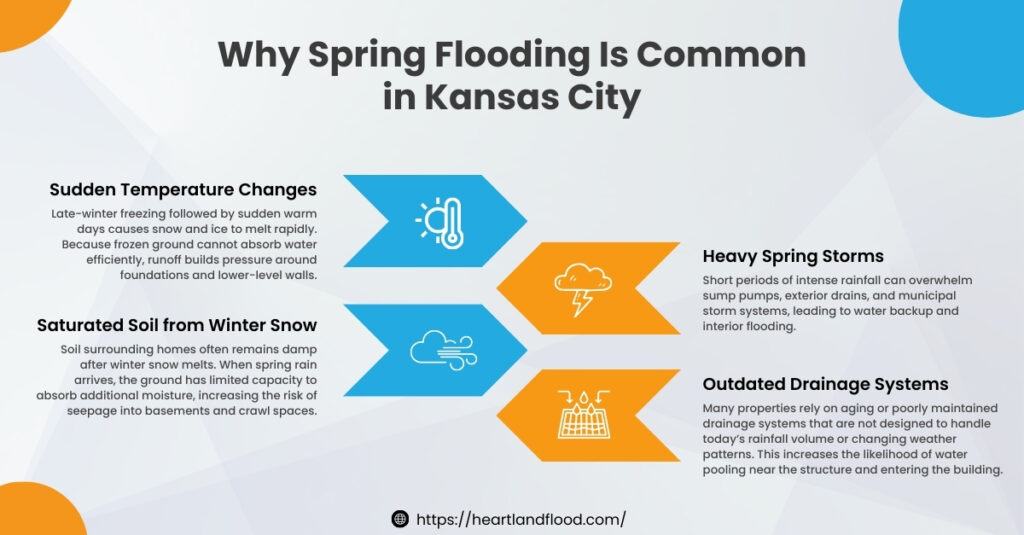
Spring flooding in Kansas City is rarely caused by a single issue. Instead, several seasonal factors often occur at the same time, increasing pressure on foundations and drainage systems.
Sudden Temperature Changes
Late-winter freezing followed by sudden warm days causes snow and ice to melt rapidly. Because frozen ground cannot absorb water efficiently, runoff builds pressure around foundations and lower-level walls.
Saturated Soil from Winter Snow
Soil surrounding homes often remains damp after winter snow melts. When spring rain arrives, the ground has limited capacity to absorb additional moisture, increasing the risk of seepage into basements and crawl spaces.
Heavy Spring Storms
Short periods of intense rainfall can overwhelm sump pumps, exterior drains, and municipal storm systems, leading to water backup and interior flooding.
Outdated Drainage Systems
Many properties rely on aging or poorly maintained drainage systems that are not designed to handle today’s rainfall volume or changing weather patterns. This increases the likelihood of water pooling near the structure and entering the building.
Example:
Early in spring 2025, a number of households endured basement flooding as a result of several storms that overloaded sump pumps that hadn’t been inspected since the winter. Planning for early water damage prevention could have lessened the harm.
Water Control Tips Before Spring Hits
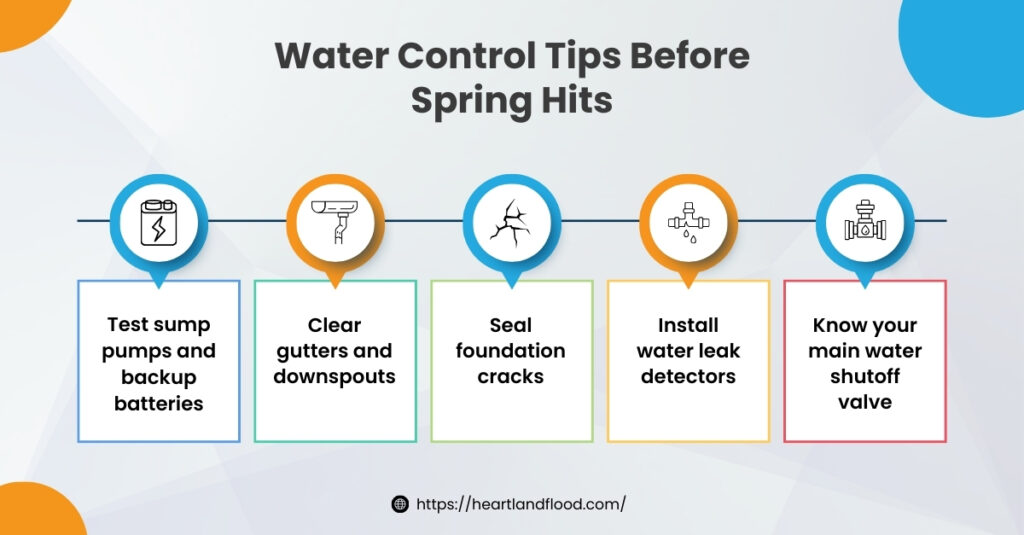
Every year, Kansas City property owners can lower their risk of water damage and basement flooding by taking action before the rainy season starts. These steps are simple, practical, and effective when done before spring storms arrive.
- Test sump pumps and backup batteries
- Clear gutters and downspouts
- Seal foundation cracks
- Install water leak detectors
- Know your main water shutoff valve
These steps are practical measures that help protect both the structure and long-term property value.
What to Do If Flooding Starts Suddenly
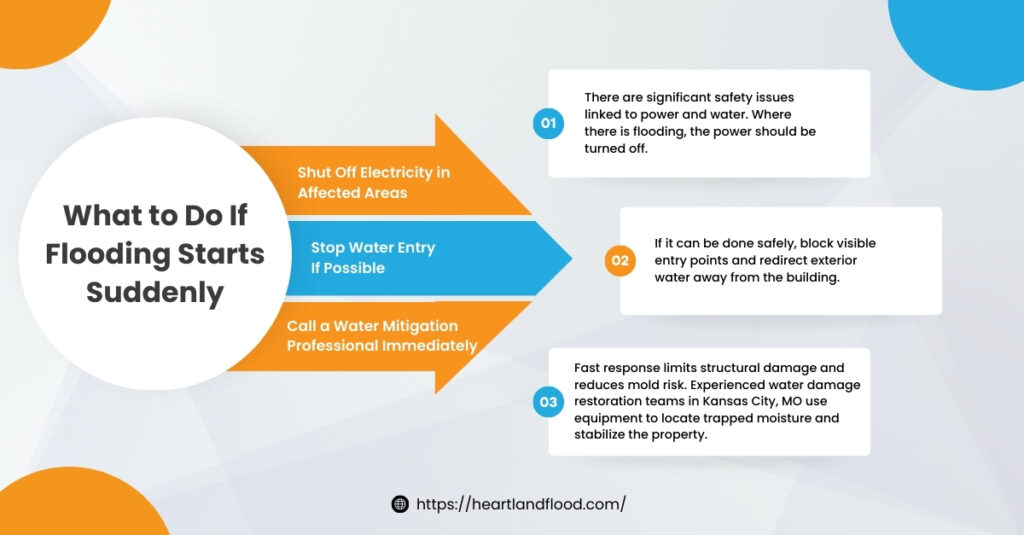
Severe spring storms can have an impact on even well-maintained properties. It’s essential to act quickly when water enters a building.
Shut Off Electricity in Affected Areas
There are significant safety issues linked to power and water. Where there is flooding, the power should be turned off.
Stop Water Entry If Possible
If it can be done safely, block visible entry points and redirect exterior water away from the building.
Call a Water Mitigation Professional Immediately
Fast response limits structural damage and reduces mold risk. Experienced water damage restoration teams in Kansas City, MO use equipment to locate trapped moisture and stabilize the property.
Delaying service often leads to more extensive water damage and significantly higher repair costs.
Why Heartland Restoration Is the Preferred Choice
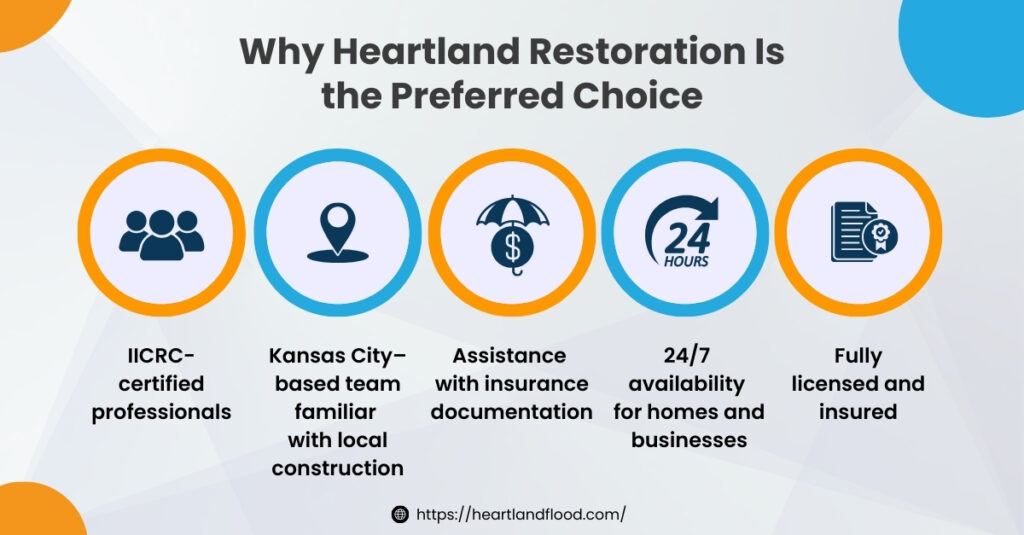
Choosing the right restoration provider plays a major role in how quickly a property recovers. Local experience and reliable response matter.
- IICRC-certified professionals
- Kansas City - based team familiar with local construction
- Assistance with insurance documentation
- 24/7 emergency response for homes and businesses
- Fully licensed and insured
This approach reduces delays and keeps the restoration process clear and organized.
Service Area Near Kansas City

Heartland Restoration serves the greater Kansas City area, including:
- Overland Park
- Olathe
- Lenexa
- Independence
- Lee’s Summit
- Shawnee
Local coverage allows faster response times for water damage restoration needs throughout the region.
Last updated July 16, 2026
Frequently Asked Questions
How quickly should I call for water damage restoration after flooding?
Immediately. The first 24 hours are critical for controlling moisture and limiting further damage.
Is professional water mitigation necessary for minor flooding?
Yes. Even small amounts of water can move into walls and flooring. Professional water mitigation services in Missouri ensure hidden moisture is properly removed before long-term issues develop.
When is flood risk highest in Kansas City?
Late March through June, when saturated ground, spring thunderstorms, and rapid snowmelt combine. Basements and low-lying rooms are most vulnerable during back-to-back storm systems, because the soil has no capacity left to absorb the next round of rain.
How can I prepare my basement for spring storms?
Before storm season: test the sump pump, add a battery backup, clean gutters, extend downspouts away from the foundation, seal visible cracks, and raise stored belongings onto shelving. A pre-season inspection catches the small gaps water will find in April.
What is the difference between water mitigation and water damage restoration?
Mitigation is the emergency phase - stopping the spread, extracting water, and drying the structure. Restoration is the rebuild phase that follows: replacing drywall, flooring, and finishes. Fast mitigation is what keeps the restoration phase small.
What should I do if spring flooding reaches my home despite preparation?
Shut off power to affected areas if it is safe, photograph the water line, and call for professional mitigation right away. Heartland crews arrive across Kansas City within 60-90 minutes, 24/7, at (913) 213-3686.
What does spring storm damage cleanup involve?
Spring storm cleanup in Kansas City means extracting flood or rain water, drying the structure, and removing saturated materials before mold starts. Because spring brings repeated storms, it also includes checking the sump pump, drainage, and grading so the next storm does not repeat the loss. Fast drying is the key to limiting damage.
Does storm damage cleanup include mold prevention?
Yes. Proper storm cleanup is not just removing water - it includes drying the structure to a verified moisture level and applying antimicrobial treatment so mold, which can start within 24 to 48 hours, never gets established. Skipping the drying step is the most common reason a cleaned-up flood turns into a mold problem weeks later.
Sources & References
- National Flood Insurance Program - Flood Insurance & Recovery Guidance - FEMA (Federal Emergency Management Agency)
- National Weather Service Flood Safety - NOAA National Weather Service
- ANSI/IICRC S500 Standard for Professional Water Damage Restoration - IICRC (Institute of Inspection, Cleaning and Restoration Certification)
Final Thoughts
Spring flooding in Kansas City rarely resolves on its own. Water that is not addressed early often leads to deeper damage, higher repair costs, and longer disruption.
When moisture enters a property, waiting for it to dry naturally is usually the wrong approach. Early water mitigation helps control the spread, protect structural materials, and prevent secondary issues like mold growth from developing.
For property owners preparing for the 2026 spring season, Heartland Restoration provides professional water mitigation and water damage restoration services throughout Kansas City and is ready to respond quickly when spring flooding or water damage occurs.
Comments
No comments yet.