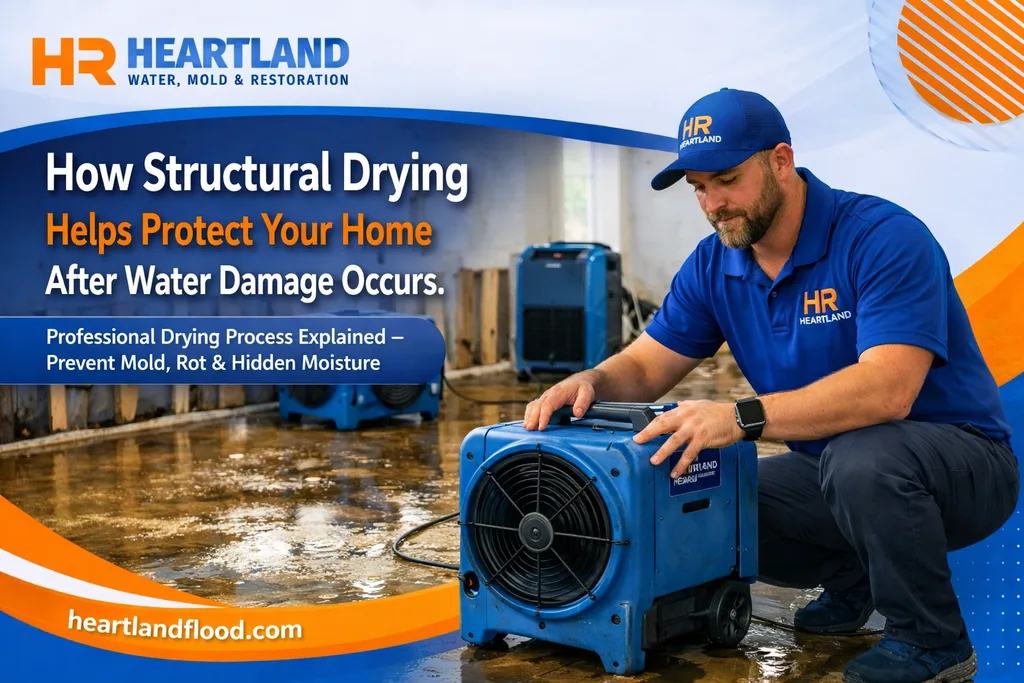
Water gets in - and that is sometimes unavoidable. A pipe bursts in the middle of the night. A storm pushes water through a window you did not know was leaking. The washing machine hose gives out while you are at work. You come home to wet floors, soaked walls, and that sinking feeling in your stomach.
What happens in the hours and days after that moment determines whether you are dealing with a manageable repair or a months-long nightmare. One of the most important steps during that process is structural drying - and most homeowners have never heard this term before they need it.
What Is Structural Drying?
Structural drying is the professional process of removing moisture from the materials that make up your home: drywall, framing, insulation, flooring, ceilings, subfloors, and concrete surfaces.
Many homeowners think removing visible water is enough. In reality, surface water is only part of the problem. Water quickly spreads into hidden areas behind walls, under flooring, and inside structural materials. Even when a floor or wall feels dry to the touch, moisture can still remain trapped inside.
Professional water damage drying focuses on removing both visible and hidden moisture before it turns into a much larger problem. To understand the full mitigation process that comes before structural drying, immediate water mitigation explains the critical first steps that protect a home from escalating damage.
How Water Spreads Through a Home
One of the biggest surprises for homeowners is how quickly water travels through building materials. A wet floor usually means the subfloor underneath is also wet. Baseboards absorb moisture. Drywall pulls water upward. Insulation traps moisture inside wall cavities.
In many situations, water spreads far beyond the area where the leak first started. This process - water migration in building materials - happens much faster than most people realize. Simply mopping up water and turning on a fan is rarely enough. Surface drying may make things look better temporarily, but hidden moisture often remains inside the structure long after visible water disappears.
Why Hidden Moisture Becomes a Serious Problem
Mold Growth Can Start Quickly
One of the biggest risks after water damage is mold growth. Mold can begin developing within 24 to 48 hours when moisture remains trapped inside warm building materials. The difficult part is that mold often grows in places homeowners cannot easily see - wall cavities, insulation, and beneath flooring.
Understanding why professional mold remediation goes beyond surface cleaning helps explain what happens when moisture is not fully removed from structural materials after water damage occurs.
Structural Damage Gets Worse Over Time
Wood framing, subfloors, and structural supports weaken when they remain wet for too long. Moisture causes materials to swell, warp, soften, and eventually deteriorate. Wood rot can affect the strength and stability of floors, walls, and support structures throughout the home.
Indoor Air Quality Declines
Damp materials also affect the air inside the home. Wet drywall, insulation, and flooring release moisture and contaminants into the air over time. Poor indoor air quality after flooding can lead to odors, allergy symptoms, and respiratory irritation for everyone living in the space.
What Professional Structural Drying Actually Involves
Moisture Inspection Comes First
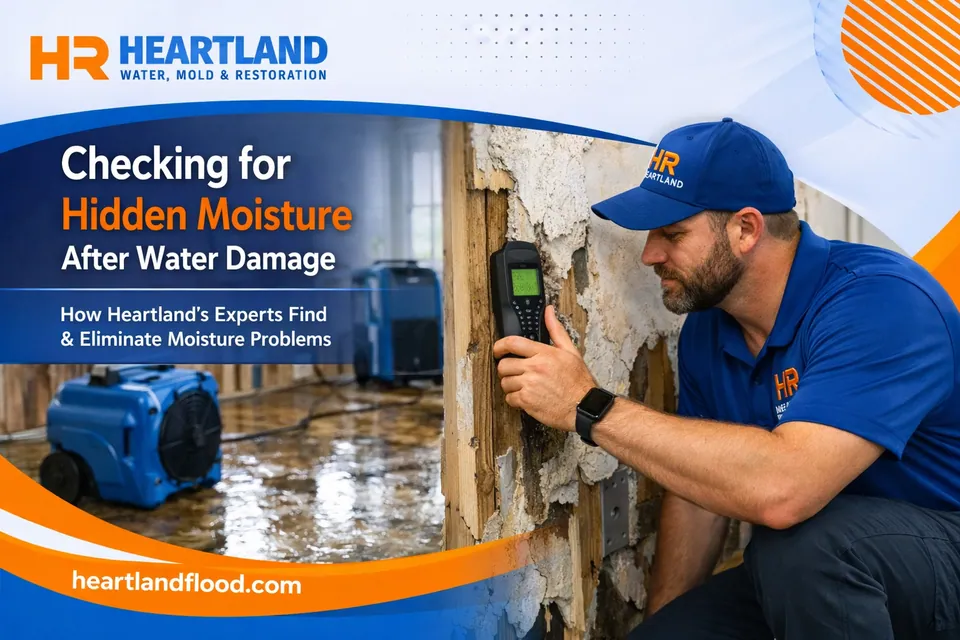
Before any drying equipment is placed, technicians inspect affected areas using moisture meters and thermal imaging technology. These tools locate hidden moisture behind walls, under flooring, and inside structural materials without unnecessary demolition.
Controlled Removal of Damaged Materials
In some situations, damaged materials need to be removed to allow trapped moisture to dry properly. This may include sections of drywall, insulation, flooring, or baseboards that absorbed too much water to be restored safely. Proper removal prevents moisture from remaining trapped inside wall cavities where mold can begin spreading later.
Industrial Drying Equipment Makes a Huge Difference
Professional drying equipment works very differently from standard household fans or dehumidifiers. Industrial dehumidifiers remove large amounts of moisture from the air while high-powered air movers increase airflow across wet materials to speed up evaporation. Together, these systems create a controlled drying environment designed to pull moisture out of the home as efficiently as possible.
Daily Moisture Monitoring Matters
Professional drying is not a one-time setup. Moisture levels must be checked regularly throughout the project. Technicians return daily to monitor moisture readings, adjust equipment placement, and confirm that all affected materials continue drying properly. Materials that feel dry on the surface may still contain significant hidden moisture internally.
How Long Does Structural Drying Take?
Most residential structural drying projects take between 3 and 5 days, although larger losses or delayed cleanup can take longer. The faster drying begins, the better the outcome usually is. Quick response helps reduce mold growth, material damage, and overall restoration costs.
Every additional day moisture remains inside building materials increases the risk of secondary damage developing later. At Heartland Restoration, restoration crews respond quickly to water damage situations because fast structural drying can make a major difference in protecting a home from additional damage. Call (913) 273-3686 for 24/7 emergency response.
Structural Drying and Insurance Claims
Many homeowners are surprised to learn that structural drying is often covered as part of a water damage insurance claim. Professional restoration companies document moisture levels, drying progress, equipment usage, and affected materials throughout the process. This documentation helps support insurance claims and shows that proper mitigation steps were taken.
Without professional drying documentation, insurance companies may later question whether secondary damage like mold could have been prevented.
Frequently Asked Questions About Structural Drying
What is the difference between structural drying and just using fans?
Professional structural drying uses industrial equipment and moisture monitoring to remove hidden moisture from walls, flooring, and framing. Household fans only dry the surface and often miss moisture trapped inside materials.
How quickly should structural drying begin after water damage?
Drying should begin as soon as possible. Fast action helps reduce mold growth, structural damage, and long-term moisture problems.
Does structural drying always require removing walls or flooring?
Not always, but damaged drywall, flooring, or insulation sometimes needs removal so trapped moisture can dry properly. The decision depends on moisture levels and material damage.
How do professionals know when everything is fully dry?
Technicians use moisture meters and thermal imaging equipment to monitor moisture levels daily. Drying is complete only when materials return to safe moisture ranges.
Will homeowners insurance cover structural drying?
In many cases, yes. Most insurance policies cover structural drying as part of a sudden water damage claim when proper documentation is provided.
Can mold still grow during the drying process?
Professional drying is designed to remove moisture quickly before mold has a chance to spread. That is why starting the process early is so important.
What happens if structural drying is skipped?
Skipping proper drying can lead to hidden mold, wood rot, bad odors, poor indoor air quality, and expensive structural repairs that surface weeks or months later.

Comments
No comments yet.