

Quick answer: Shut off the water at the main valve, then cut power to any wet area if it is safe to reach the breaker. Photograph everything before you move or clean anything, move undamaged belongings to a dry room, and call for professional extraction. Drying the structure within 24 to 48 hours is what prevents mold.
Water damage emergencies can escalate quickly if not handled properly. Knowing exactly what to do after water damage Kansas City homeowners face can make the difference between a quick recovery and costly repairs. Acting fast helps reduce structural damage, prevents mold growth, and ensures a smoother insurance process.
Below is a practical, step-by-step checklist to guide you through the first critical hours.
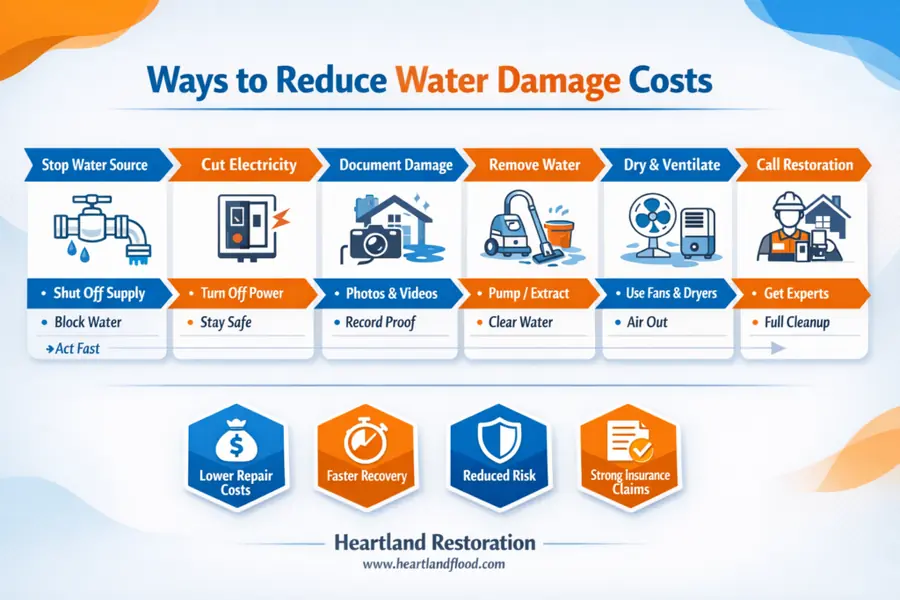
Step 1 - Stop the Water Source
The first priority is to stop additional water from entering your home. If the damage is caused by a burst pipe or plumbing issue, shut off your main water supply immediately.
If the source is external, such as flooding, focus on limiting water entry as much as possible while preparing for the next steps.
Taking quick action at this stage directly reduces repair costs and prevents further damage.
Step 2 - Turn Off Electricity immediately after Water Damage
Water and electricity are a dangerous combination. Before entering affected areas, turn off power from your breaker panel.
If the area is heavily flooded or unsafe to access, avoid entering and call professionals instead.
Safety should always come first when dealing with what to do after water damage Kansas City situations.
Step 3 - Document the Damage
Before starting cleanup, document everything thoroughly. Take clear photos and videos of all affected areas, including:
- Walls and ceilings
- Flooring and carpets
- Furniture and personal belongings
- Visible water levels and stains
This documentation is essential for a successful insurance claim and ensures you receive fair compensation.
Proper documentation is a critical step in any water damage cleanup checklist.
Step 4 - Remove Standing Water
Standing water can cause rapid structural damage and lead to mold growth within 24 to 48 hours.
You can begin removing water using:
- Buckets and towels for small areas
- Wet vacuums or pumps for larger volumes
For severe cases, it’s best to call professional water removal services to ensure complete extraction and prevent hidden moisture issues.
Step 5 - Dry and Ventilate the Area
Once standing water is removed, drying becomes the next priority.
- Open windows to improve airflow
- Use fans to circulate air
- Run dehumidifiers to remove moisture
Hidden moisture inside walls and flooring is one of the biggest risks after water damage. Proper drying is essential when addressing what to do after water damage Kansas City homeowners often overlook.
Step 6 - Call a Restoration Company after Water Damage
Even if the damage appears minor, professional restoration ensures that moisture is fully eliminated and prevents long-term issues like mold and structural weakening.
Experienced teams use specialized equipment to detect and remove hidden moisture, ensuring your home is truly dry and safe.
Common Mistakes to Avoid
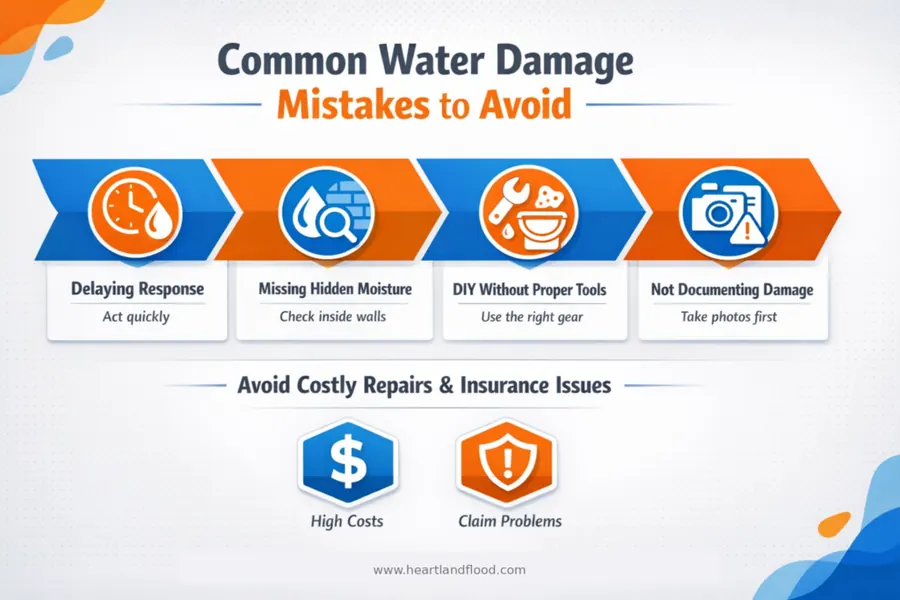
When dealing with emergency water damage steps Kansas City residents face, avoiding these mistakes can save time and money:
- Waiting too long to act
- Ignoring hidden moisture inside walls
- Attempting full DIY cleanup without proper equipment
- Failing to document damage before cleanup
These errors often lead to higher repair costs and insurance complications.
Final Checklist to Follow after Water Damage
Following this checklist ensures you are taking the right steps when figuring out what to do after water damage Kansas City properties experience.
Need Immediate Help? Contact Heartland Restoration
When water damage strikes, you need more than just cleanup. You need a team that responds fast, communicates clearly, and handles both restoration and insurance support with complete transparency.
Heartland Restoration provides:
- Rapid emergency response
- Clear and upfront pricing with no hidden costs
- Full assistance with insurance claims
- Advanced drying and restoration technology
Call Heartland Restoration today and get expert help you can trust, with honest pricing and complete clarity every step of the way.
If you’re dealing with basement flooding or sudden water damage, don’t wait for the problem to get worse.
Call 24/7 Emergency HotlineLast updated July 16, 2026
Frequently Asked Questions About What to Do After Water Damage
What is the first thing I should do after water damage?
Stop the water at its source - shut off the main water valve for plumbing failures - and keep people out of affected rooms. Then turn off electricity to wet areas, document the damage with photos, and start removing standing water as soon as it is safe.
Should I turn off electricity after water damage?
Yes. If water is near outlets, appliances, or your breaker panel, shut off power to those rooms immediately. Water conducts electricity, and a wet, energized room is a shock and fire hazard. If you cannot reach the panel without stepping in water, stay out and call for help first.
Can I stay in my house after water damage?
For a small, clean-water leak that is dried quickly, usually yes. Plan to stay elsewhere when sewage is involved, standing water covers multiple rooms, the power must stay off, or anyone in the home has respiratory issues - contaminated water and early mold growth are real health risks.
What should I not do after water damage?
Do not use a household vacuum on standing water, run soaked appliances, or throw away damaged items before photographing them for your claim. Waiting to see if things dry on their own is the most expensive mistake - moisture trapped in walls and flooring keeps causing damage.
Who should I call first - my insurance company or a restoration company?
If water is actively spreading, call a restoration company first: policies require you to prevent further damage, and mitigation cannot wait for an adjuster. Report the claim to your insurer once the situation is under control. Heartland documents the loss and supports your claim with adjuster-ready records, so both steps move together.
How fast can Heartland Restoration respond in Kansas City?
Heartland dispatches 24/7 across the Kansas City metro and typically arrives within 60-90 minutes of your call at (913) 213-3686. Fast arrival matters because extraction started in the first few hours dramatically limits drywall, flooring, and mold damage.
Sources & References
- ANSI/IICRC S500 Standard for Professional Water Damage Restoration - IICRC (Institute of Inspection, Cleaning and Restoration Certification)
- National Flood Insurance Program - Flood Insurance & Recovery Guidance - FEMA (Federal Emergency Management Agency)
- National Weather Service Flood Safety - NOAA National Weather Service

Comments
No comments yet.