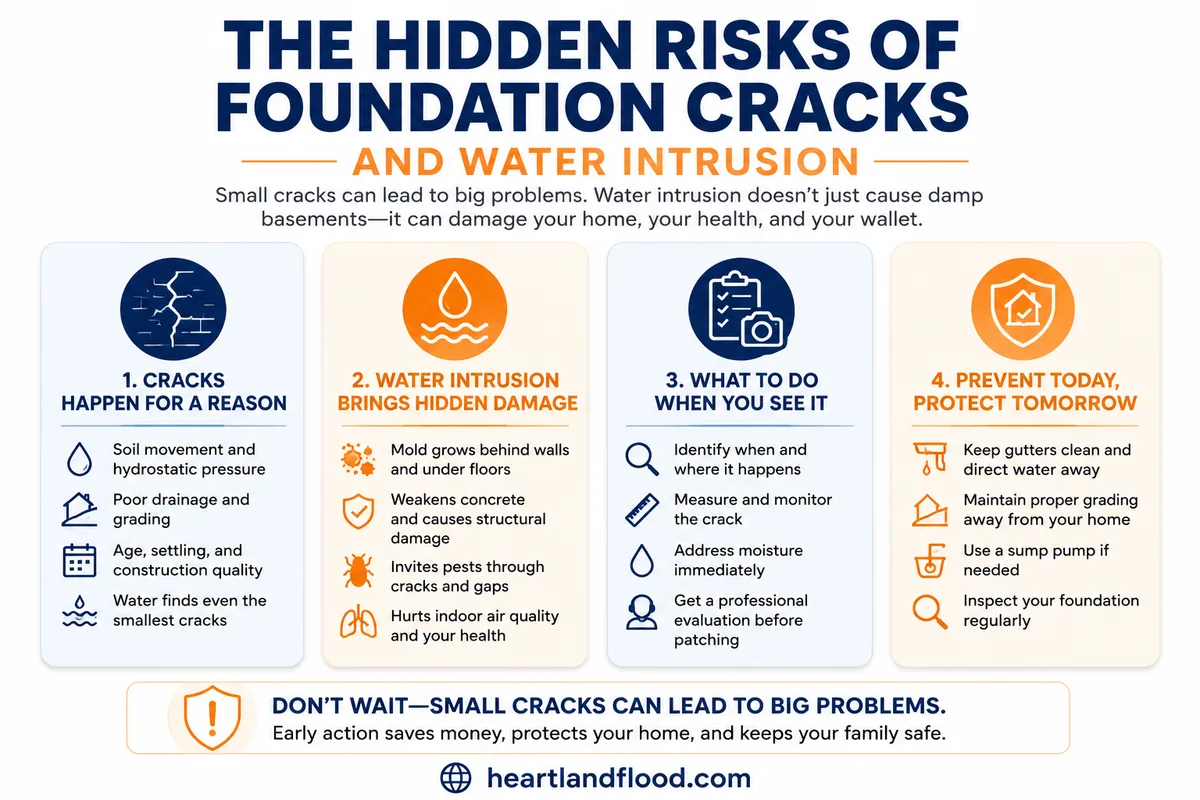
Quick answer: Foundation cracks matter because they let water in, and water intrusion drives mold, structural weakening, and poor indoor air quality long before you see standing water. Thin hairline cracks are usually cosmetic, but horizontal cracks, stair-step cracks, or anything wider than a quarter inch with active water needs a professional evaluation, not just a tube of sealant.
Knowing why cracks form, what they let inside, and which signs call for an immediate response can be the difference between a quick patch and a five-figure structural repair. Foundations move, and minor movement is normal. What is not normal is the kind of movement strong enough to split concrete and open a path for water. When that happens, professional water damage restoration is often needed to address the damage the water has already done.
How Foundation Cracks Actually Form
Soil Movement and Hydrostatic Pressure
The soil surrounding a foundation expands as it absorbs water and contracts as it dries out, and that constant swelling and shrinking puts pressure on the walls below ground. Hydrostatic pressure, the force of water pushing against a foundation wall, can be enough to crack even properly poured concrete, especially after heavy or prolonged rain.
Poor Drainage and Grading
A yard that slopes toward the house instead of away from it sends rainwater straight to the foundation. Clogged gutters and downspouts that empty too close to the wall create the same problem, concentrating water in one spot until it finds a weak point to exploit.
Age, Settling, and Construction Quality
Every foundation settles slightly as a home ages, and minor settling is expected. Uneven settling is a different matter, caused by inconsistent soil compaction during construction or shifting ground over decades. This shows up often in Kansas City area homes, where clay-heavy soil expands and contracts more dramatically with seasonal moisture changes than sandier soil types do, putting extra strain on foundations that other regions do not deal with to the same degree.
Why a Small Crack Is Not Always Small
Thin, vertical hairline cracks under about one-sixteenth inch wide are often just the result of normal concrete curing and rarely affect structural integrity. Horizontal cracks, stair-step cracks in block foundations, or anything wider than a quarter inch are a different story; these patterns often point to pressure or movement that needs an engineer evaluation, not just a tube of sealant.
Even a crack too thin to see clearly can let water through under sustained hydrostatic pressure. Water follows rebar, expands during freeze-thaw cycles, and gradually widens the very crack it enters through. Concrete is porous at a microscopic level too, so moisture can wick upward through a wall even without a visible crack, leaving the faint staining or chalky residue many homeowners notice long before they ever see standing water.
The Hidden Risks Most Homeowners Do Not See
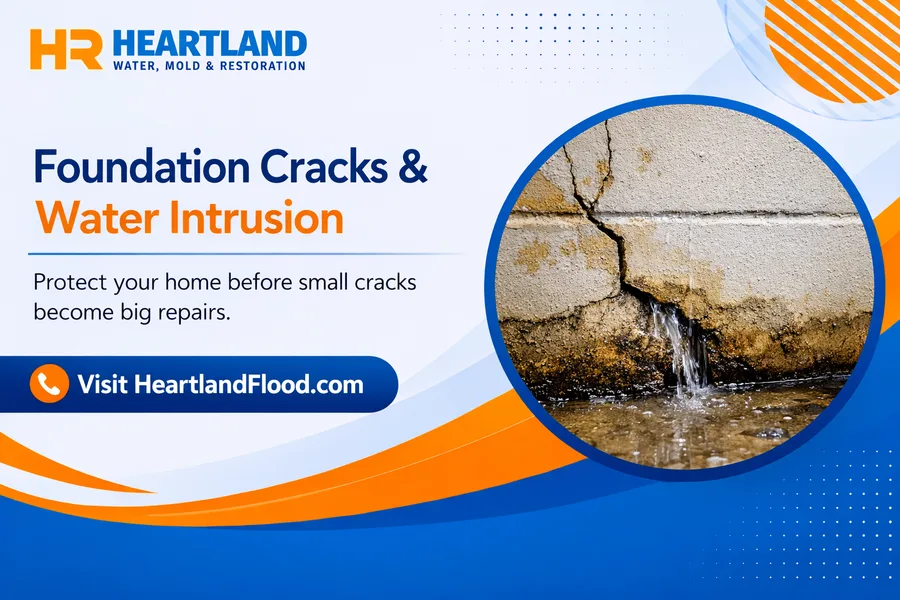
Moisture that gets behind drywall, insulation, or under flooring creates exactly the environment mold needs to grow: dark, damp, and largely undisturbed. Water that repeatedly enters through a crack can also corrode embedded rebar, causing it to expand and crack the surrounding concrete further, and it can erode the soil beneath footings, leading to additional settling. What started as a cosmetic issue can become a genuine structural concern.
Cracks that let water in also let insects and rodents in, and mold spores plus elevated humidity circulate through HVAC systems to affect air quality throughout the home. That is a real concern for anyone with asthma, allergies, or respiratory sensitivities. The EPA mold cleanup guidance stresses that controlling moisture is the only lasting way to control mold. Foundation issues also have a way of surfacing during a home inspection right before closing, where even a cosmetic-looking crack can stall a sale until it is addressed.
Warning Signs You Should Not Ignore
- A musty or earthy smell in the basement that does not go away with ventilation
- Efflorescence, the white chalky mineral deposits on basement walls
- Doors and windows that stick or no longer close properly
- Visible gaps where walls meet the floor or ceiling
- Bowing or bulging foundation walls
- Damp spots that reappear in the same place after every rain
What to Do When You Spot a Crack or Water Intrusion
- Note when it happens. Does water show up only after rain, or is it constant? That timing tells a lot about the cause.
- Check the exterior grading and gutters first. Sometimes the fix is as simple as redirecting water away from the foundation.
- Measure the crack. Width, direction, and whether it is growing are details worth tracking with photos over a few weeks.
- Address moisture promptly. Standing water or persistent dampness should be dried out quickly to limit mold growth.
- Get a professional opinion before patching. Sealing a crack without addressing the underlying water pressure often means it reopens within a season.
DIY Fixes vs. When You Need a Professional
A hairline crack with no active water can often be sealed with an epoxy or polyurethane injection kit, and for homeowners comfortable with basic repairs, that is a reasonable weekend project. But once water is actively entering, the crack is wider than a quarter inch, or there are signs of structural movement like bowing walls or stair-step cracking, the job has moved beyond a DIY fix.
A DIY sealant kit runs a fraction of the price of professional waterproofing, but if it is applied to a crack that is still actively under pressure, the repair tends to fail within a season or two, and by then water may have already reached framing or insulation that a surface patch never addressed. Spending a little more upfront on an accurate diagnosis often saves money compared with repeating a repair that was never going to hold. If mold has already taken hold, our guide to professional mold removal after water damage covers the next steps.
How Professionals Assess and Repair Foundation Water Intrusion
A proper assessment starts outside, evaluating grading, drainage, and gutter performance before ever touching the crack itself, because patching from the inside without correcting the outside water source rarely holds. From there, professionals test moisture levels in surrounding materials, check for mold that may already be present, and recommend a repair method suited to the actual cause, whether that is exterior waterproofing, an interior drainage system, crack injection, or structural reinforcement.
At Heartland Restoration, the process includes checking for moisture that may have already reached framing, insulation, or subfloor materials, since a crack repair that ignores existing water damage only solves part of the problem.
Preventing Future Foundation Water Problems
- Keep gutters clean and downspouts extending at least four to six feet from the foundation
- Grade soil so it slopes away from the house at a gentle, consistent angle
- Install a sump pump if your basement has a history of water intrusion
- Inspect foundation walls once or twice a year, especially after heavy rain seasons
- Address small cracks early, before hydrostatic pressure gets the chance to widen them
Active water intrusion, visible mold, a musty smell that will not clear, or cracks that keep widening are all signs the problem has outgrown a DIY approach. Heartland Restoration provides emergency response and adjuster-ready claim documentation for homeowners across Overland Park, Lenexa, and the greater Kansas City metro. Call (913) 213-3686 or book a free inspection.
Frequently Asked Questions
How do I know if a foundation crack is serious?
Cracks wider than a quarter inch, horizontal cracks, or any crack paired with active water or bowing walls should be evaluated by a professional rather than sealed and ignored. Thin vertical hairline cracks under about one-sixteenth inch are usually just normal concrete curing.
Can a small foundation crack really cause mold?
Yes. Even minor water intrusion can create the damp, dark conditions mold needs, often growing unseen behind walls or flooring before it is noticed. By the time a musty smell becomes obvious, mold has often been established for weeks in spaces no one ever sees.
How much does foundation crack repair typically cost?
Costs vary widely depending on the cause and method, from a simple epoxy injection to full exterior waterproofing. A professional assessment that identifies why the foundation is taking on pressure is the best way to get an accurate number and avoid paying for a repair that fails within a season.
Will homeowners insurance cover foundation water damage?
It depends on the cause. Sudden water intrusion is sometimes covered, while damage from long-term neglect or normal settling typically is not. Check your policy directly, and document the damage with dated photos so you have evidence of when the problem appeared.
Is it normal for a new home to develop foundation cracks?
Minor hairline cracks from concrete curing are common in the first year or two and usually are not a structural concern, but they are still worth monitoring. Track their width and direction over a few weeks so you can tell whether they are stable or growing.
Can I just paint over a damp basement wall instead of fixing the crack?
It is not a fix. Sealant paint can trap moisture inside the wall and mask a problem that is still actively getting worse behind the surface. Addressing the water source is the only lasting solution.
How often should I inspect my foundation for cracks?
A walk-around once or twice a year, plus a check after any unusually heavy rain, is enough to catch most issues early. In the Kansas City area, clay-heavy soil makes seasonal inspections especially worthwhile.

Comments
No comments yet.