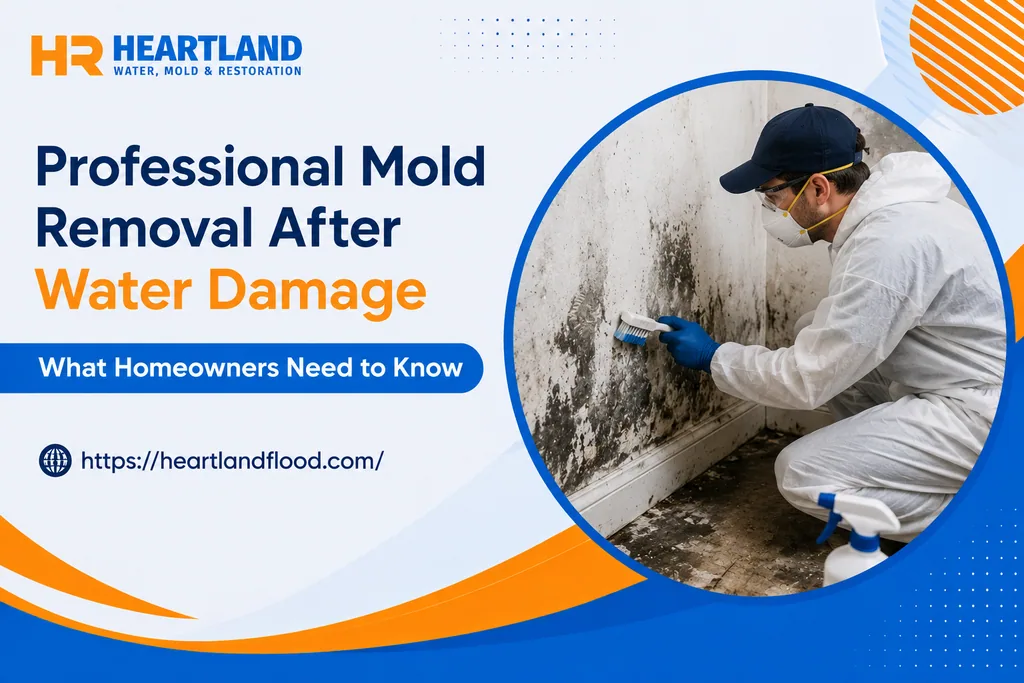
After a flood, plumbing leak, or storm-related water intrusion, many homeowners focus on removing visible water and drying the surface. What often goes unnoticed is the moisture trapped behind walls, beneath flooring, and inside insulation. These damp areas can quickly create the conditions mold needs to grow and spread.
Many property owners searching for the best mold removal companies near me are dealing with ongoing moisture issues that started weeks earlier after water damage was never fully addressed. In many cases, the first signs are subtle - a musty odor, discoloration on drywall, or carpet that still feels damp days after cleanup.
At Heartland Restoration Services, mold remediation services are designed to identify hidden moisture, contain affected areas, and restore safer indoor conditions before the damage spreads further throughout the property. Call (913) 213-3686 for a free on-site assessment.
Persistent Musty Odors That Do Not Go Away
One of the most common signs of hidden mold growth is a strong musty smell indoors. Even when walls and flooring appear dry, trapped moisture inside structural materials can continue feeding mold growth behind the surface.
A homeowner in the Kansas City area recently noticed a damp odor returning every time the air conditioning system turned on. After inspection, moisture was discovered behind drywall near a slow plumbing leak that had gone undetected for weeks. Professional drying and mold remediation helped prevent the contamination from spreading into nearby rooms.
Property owners searching for mold services near me often contact restoration professionals after noticing odors that regular cleaning cannot eliminate.
Discoloration on Walls, Ceilings, or Flooring
Mold growth can appear as dark spotting, staining, or discoloration around moisture-damaged areas. Water stains that continue growing larger or paint that begins peeling may indicate hidden moisture behind the surface.
Common Areas Where Mold Develops
- Basement walls after flooding
- Around leaking pipes beneath sinks
- Ceiling corners affected by roof leaks
- Under carpet padding after water damage
- Bathrooms with poor ventilation
- Crawl spaces with excess humidity
In many situations, mold spreads long before it becomes clearly visible. According to the EPA's mold guidance, mold can begin growing within 24 to 48 hours when moisture remains trapped indoors.
What Does Mold on Carpet Look Like After Water Damage?
Many homeowners ask what mold on carpet looks like after a leak or flood affects the property. Carpet mold may appear as gray, green, black, or white spotting combined with a damp texture and musty smell.
One local business experienced overnight water damage after a pipe failure affected several offices. Although standing water was removed immediately, moisture beneath the carpet padding remained trapped. Within days, dark discoloration and odors developed along the flooring edges. Professional drying equipment and remediation services helped stop the mold from spreading further into the building materials.
Carpet mold is especially common when wet flooring is not professionally dried within the first 24 to 48 hours after water exposure.
Increased Humidity and Condensation Indoors
Excess humidity inside a property can create long-term moisture problems that support mold growth. Condensation around vents, windows, or HVAC systems may indicate poor airflow or hidden moisture buildup inside the structure.
Basements, laundry rooms, bathrooms, and crawl spaces are especially vulnerable because moisture tends to remain trapped in these areas longer. Properties in Olathe, Lenexa, and Parkville frequently experience elevated indoor humidity after heavy Kansas City spring rains.
Many people searching for the best mold removal companies near me are dealing with recurring mold issues caused by untreated humidity rather than a single flooding event.
Why Professional Mold Removal Matters
Surface cleaning alone may not fully solve mold problems if moisture remains inside the structure. Professional mold remediation focuses on identifying the source of water intrusion, containing contaminated areas, improving indoor air quality, and restoring affected materials safely.
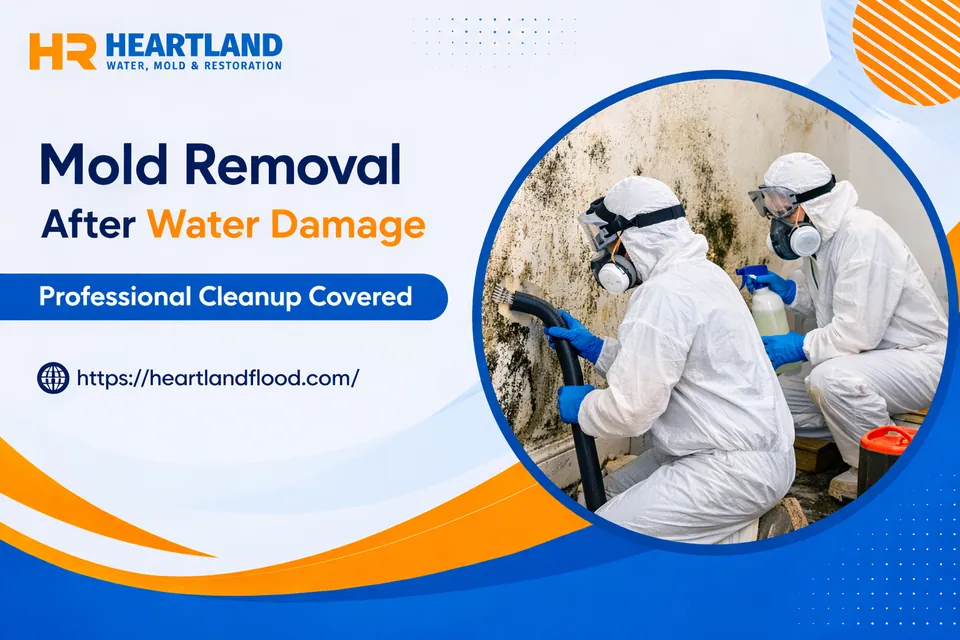
Professional Mold Services Near Me Often Include
- Moisture detection and inspection
- Containment of affected areas
- HEPA air filtration
- Removal of contaminated materials
- Structural drying and dehumidification
- Sanitization and odor control
At Heartland Restoration Services, remediation and water damage restoration services are handled using professional drying equipment and moisture control methods designed to reduce future mold risks. See also our mold remediation service page for full details.
Signs It May Be Time to Schedule Mold Remediation
Professional mold removal may be necessary if you notice:
- Persistent musty odors indoors
- Water damage that was never professionally dried
- Dark spots on walls or ceilings
- Damp carpeting after flooding
- Peeling paint or bubbling drywall
- Moisture returning in the same area repeatedly
Addressing mold early can help reduce structural damage and prevent contamination from spreading into larger areas of the property. If you notice any of the above signs, contact Heartland Restoration at (913) 213-3686.
Frequently Asked Questions
Why do homeowners search for the best mold removal companies near me after water damage?
Water damage creates moisture conditions where mold can begin spreading quickly if structural materials are not professionally dried. Once visible, mold often indicates a larger hidden problem that requires professional remediation.
What does mold on carpet look like after flooding?
Mold on carpet may appear as discoloration, dark spotting, fuzzy patches, or damp areas with strong musty odors. Professional drying within 24-48 hours prevents carpet mold from taking hold.
Do mold services near me include moisture inspections?
Yes. Professional remediation services often include moisture detection to identify hidden water intrusion behind walls and beneath flooring.
How fast can mold develop after water damage?
Mold growth can begin within 24 to 48 hours when moisture remains trapped indoors - which is why immediate professional drying after any water event is critical.
Can mold grow behind walls without visible signs?
Yes. Hidden moisture behind drywall and insulation is one of the most common causes of unnoticed mold growth. Professional moisture inspection is the only reliable way to detect it.
Is professional mold removal necessary for small mold problems?
Even smaller mold issues may indicate larger hidden moisture problems that require professional inspection and drying. Surface cleaning alone does not eliminate mold if the moisture source remains active.
Can mold return after remediation?
Mold may return if the original moisture source is not fully corrected. Heartland Restoration identifies and addresses the root moisture source as part of every remediation project.
What does attic mold remediation involve?
Attic mold remediation contains the space, removes or treats affected roof sheathing and insulation, HEPA filters the air, and fixes the cause - usually a roof leak or blocked ventilation. Improving attic airflow and sealing air leaks from the living space below keeps warm, moist air from feeding new growth.
Is black mold more urgent than other mold?
Any sizable mold growth deserves prompt attention, regardless of color. 'Black mold' often refers to Stachybotrys, but color does not identify a species or its risk - the amount of active growth and how much reaches the air matter more. Disturbing it releases spores, so significant growth should be professionally contained and removed.

Comments
No comments yet.