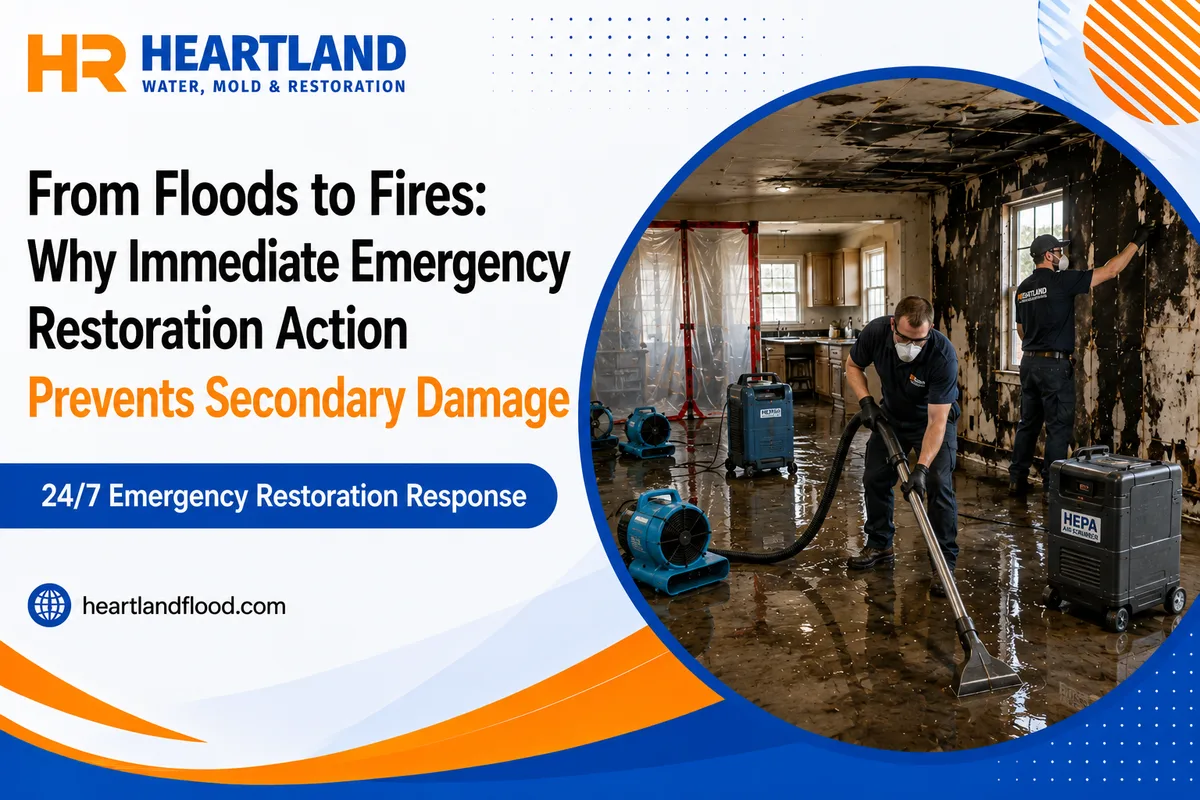
Quick answer: After a flood or fire, a second clock starts the moment the primary event ends. Water, smoke, soot, and humidity actively damage building materials within hours. The fastest way to prevent costly secondary damage is immediate professional mitigation, moisture mapping, and drying, plus board-up or tarping to keep a fire claim from becoming a water claim in the next rainfall.
The science of structural damage is unforgiving: what starts as a manageable incident compounds into something far more destructive within hours, sometimes minutes. Understanding why speed matters in emergency restoration services is not just helpful, it is essential for every property owner.
The Hidden Clock That Starts the Moment Damage Occurs
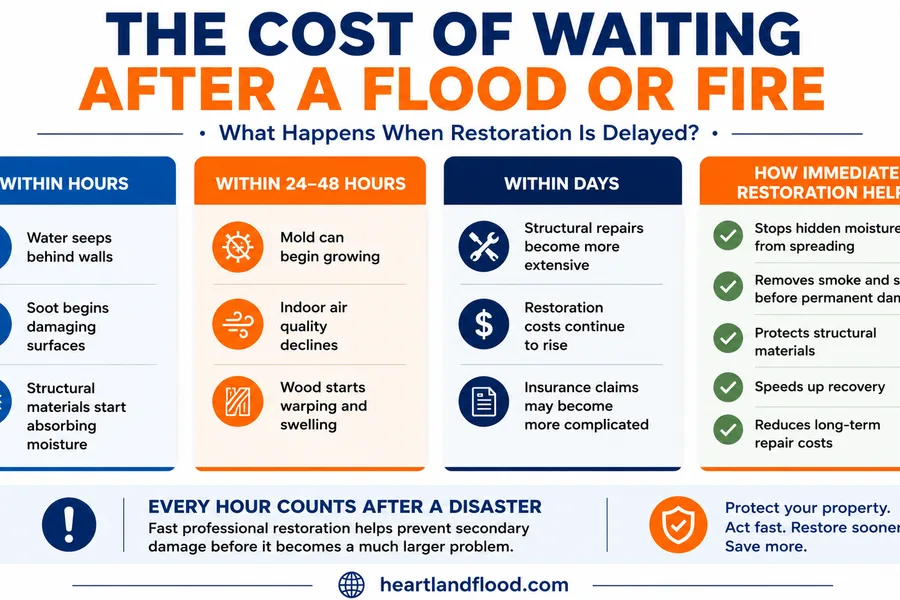
Most people imagine that damage stops when the emergency stops. The fire is out, the flood recedes, and the worst is over. In reality, a second clock starts ticking the moment the primary event ends. Water, smoke, soot, and elevated humidity are not passive, they are actively working against your property structural integrity and indoor air quality. Moisture seeps into wall cavities, subflooring, insulation, and framing within the first hour, and by the time many homeowners have contacted their insurer, microbial growth has already found the conditions it needs to begin.
Similarly, after a fire, smoke and soot restoration becomes a race against chemical corrosion. Soot is acidic, and left on metal fixtures, appliances, and surfaces it begins etching and pitting materials within hours. Fabrics, painted walls, and electronics face permanent discoloration if not addressed with the right neutralizing agents quickly. This is not a scare tactic, it is the physical chemistry of building materials under stress.
What Happens to Your Home After a Flood if You Wait
When water enters a structure, it does not stay where it lands. It travels through capillary action into porous materials. Drywall absorbs water like a sponge, hardwood floors warp and cup, and carpet padding holds moisture against subfloors far longer than the carpet surface itself. Within the first several hours, standing water removal and structural drying become critical. If water is allowed to remain, you are dealing with the beginning of wood rot in framing members, delamination of engineered wood, and the swelling of doors and window frames that can compromise their seals permanently.
Then comes the mold concern. Structural drying and mold remediation after water damage develop faster than most homeowners expect, because spores need only moisture, a food source, and warmth to begin colonizing. Once visible mold appears, you are no longer dealing with a drying job, you are dealing with a contamination scenario that requires a completely different protocol. The fastest response uses professional extraction equipment, commercial dehumidifiers, and moisture mapping to find hidden pockets of saturation, none of which a few box fans can replicate.
Fire Damage: Why the Smoke Is Often Worse Than the Flames
Most fire damage claims involve rooms that were never touched by flames. Smoke and soot travel through HVAC systems, around door frames, and through electrical chases into spaces throughout the building. A fire in one room can leave smoke odor and soot residue in bedrooms, closets, and attics far from the point of origin.
Professional smoke damage cleanup involves much more than wiping down surfaces. Different types of soot, wet soot from low-temperature fires, dry soot from fast-burning fires, and protein residue from kitchen fires, each require specific chemical treatments. Using the wrong approach can drive soot deeper into surfaces. Immediate action includes sealing HVAC systems to prevent cross-contamination, applying chemical sponges and dry cleaning methods, and beginning thermal fogging or ozone treatment for odor neutralization. The team at Heartland Restoration has managed fire damage situations where rapid deployment made the difference between a restoration project and a full reconstruction.
Secondary Damage: The Category That Drains Property Owners
Secondary damage refers to the destruction that occurs not from the original event, but from the failure to respond to it promptly and correctly. In water scenarios it includes mold growth behind walls, structural wood decay, corrosion of metal fasteners, and permanent warping of finish materials. In fire situations it includes deep penetration of soot acids, the permanent embedding of odor compounds into textiles, and corrosion of electrical components from residual moisture left by fire suppression.
Insurance adjusters are very familiar with secondary damage, and many policies distinguish between losses caused directly by the covered event and losses that resulted from a delayed response. Understanding your property damage insurance claim timeline and acting within it is critical for both your home structural health and your financial recovery.
The Role of Emergency Board-Up and Tarping Services
After fires or severe storm damage, a compromised building envelope exposes the interior to weather, vandalism, and wildlife entry. A roof opened by fire or storm damage allows rain to enter, turning a fire claim into a simultaneous water damage claim within a single rainfall event. Immediate board-up and tarping stops this cascade, preserves the existing structure, protects salvageable contents, and creates a secure environment for the assessment and restoration work that follows.
Why Professional Assessment Cannot Be Replaced by Visual Inspection
One of the most dangerous misconceptions after a disaster is that if something looks dry or undamaged, it is fine. Infrared cameras detect temperature differentials caused by moisture hiding inside wall cavities, and moisture meters provide quantitative readings of wood and drywall that look normal on the surface but are saturated behind the finish. Hidden moisture is the primary driver of mold growth and wood decay in post-flood structures. Homeowners who dry only what they can see often discover mold colonies months later. Heartland Restoration uses comprehensive moisture mapping as a standard part of every water damage response, not as an add-on.
What to Do in the First Hours After a Disaster
After a flood, shut off the water source if possible, avoid walking through standing water that may have contacted electrical systems, and remove portable items from the affected area. After a fire, do not attempt to clean soot yourself with household cleaners, since this typically makes it worse. Document everything photographically for your insurance claim. The Ready.gov flood guidance outlines safe recovery steps as well.
Then call a 24-hour emergency restoration company immediately. Response time in property restoration is not measured in business days. Every hour that passes without professional intervention is an hour that moisture, heat, soot, or biological growth is working against your property. Heartland Restoration provides rapid emergency response across the Kansas City metro. Call (913) 213-3686 or book an inspection any hour.
Frequently Asked Questions
Why is emergency restoration considered time-sensitive?
Every hour of delay increases the risk of mold growth, smoke damage, structural deterioration, and higher repair costs. Water and soot are not passive, they actively work against building materials from the moment the primary event ends.
What is secondary damage after a flood or fire?
Secondary damage includes problems like mold, corrosion, warped materials, and lingering odors that develop after the initial disaster because of a delayed or inadequate response. By definition it is preventable, and it is where most escalated restoration costs come from.
Can hidden damage exist even if my property looks fine?
Yes. Moisture, smoke residue, and structural damage often remain hidden behind walls, ceilings, and flooring. Thermal imaging and moisture meters reveal saturation that looks completely normal on the surface but is soaked behind the finish layer.
Should I wait for my insurance company before starting restoration?
No. Immediate mitigation helps prevent further damage, and proper documentation still supports your claim. Most policies actually require you to take reasonable steps to prevent additional loss, so photographing the damage and calling a restoration team quickly protects both your property and your claim.
What should I do before the restoration team arrives?
Prioritize safety, document the damage with photos, and avoid disturbing affected areas unless necessary. After a flood, shut off the water source and avoid standing water near electrical systems. After a fire, do not attempt to clean soot with household cleaners, which typically makes it worse.
How does professional restoration differ from basic cleanup?
Professional restoration addresses hidden damage, dries structural materials, removes contaminants, and restores the property safely, not just the visible mess. It uses moisture mapping, commercial drying equipment, and specific chemical treatments matched to the type of damage.
Can emergency restoration help save building materials and belongings?
Yes. A fast response often increases the chances of restoring flooring, furniture, structural components, and other salvageable items before moisture, soot acids, or mold cause permanent damage.

Comments
No comments yet.