
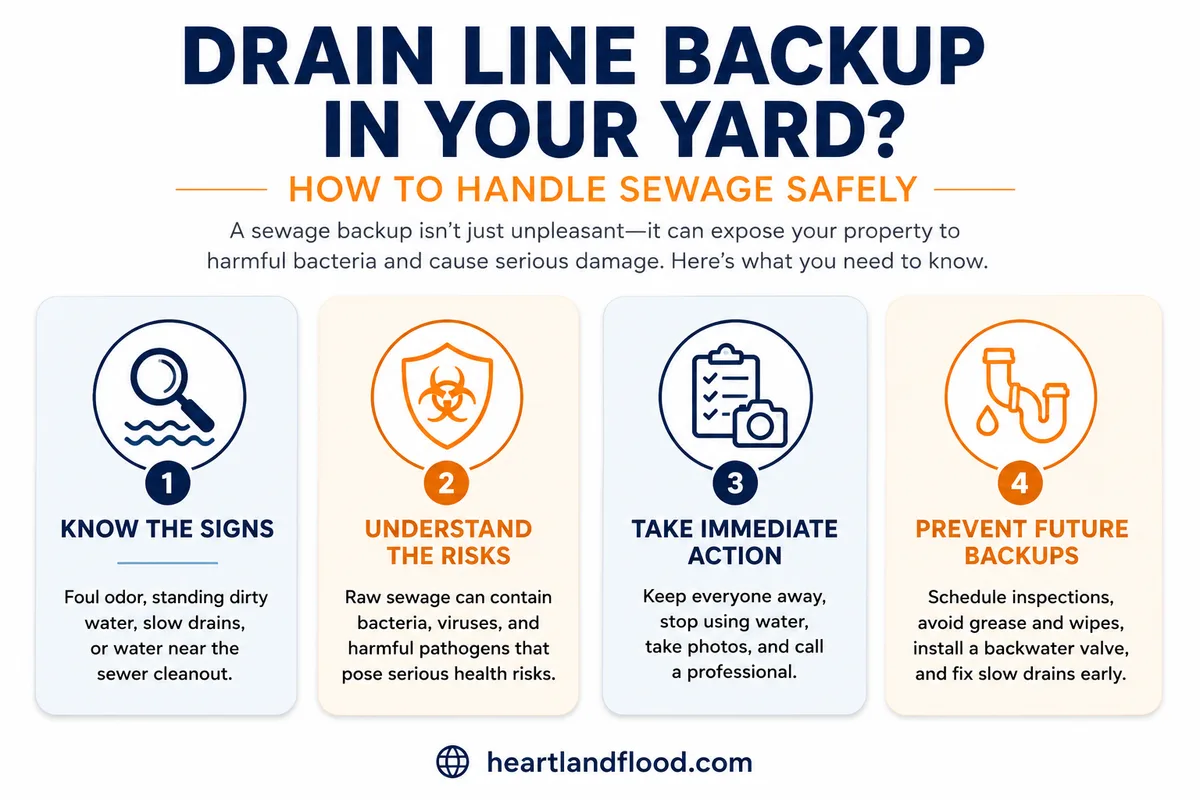
Quick answer: A drain line backup in your yard is a contamination event, not a simple drainage problem. Keep people and pets away, stop using water inside the house, photograph the damage, and call a restoration professional. Do not pressure wash or rod the line yourself while sewage is standing, both can spread contaminated water further.
Unlike a leaky faucet or a damp basement wall, a sewage backup is a contamination event, and how you handle the first hour matters almost as much as how you clean it up afterward. Water bubbling up where it has no business being is a signal to act, not to wait and see. At Heartland Restoration, the yard backups we see across the Kansas City metro almost always started as a small warning sign that went unaddressed.
What Causes a Drain Line Backup in Your Yard?
Most yard sewage backups trace back to a blockage somewhere between your home and the municipal sewer main, or in your own lateral line. When water cannot move forward, it finds the path of least resistance, often a cleanout cap, a low spot in the lawn, or back up through the lowest drain in the house.
Tree Root Intrusion
Tree roots are drawn to the moisture and nutrients inside sewer lines, and a hairline crack or a loose pipe joint is all it takes. Once a root gets a foothold it branches out fast, catching toilet paper, grease, and debris until the line is choked off. This is one of the most common causes of yard backups in older neighborhoods with mature trees and clay or cast-iron piping.
Aging or Collapsed Pipes
Clay and cast-iron sewer lines installed decades ago are prone to cracking, sagging, or collapsing under the weight of shifting soil. Once a section gives way, wastewater has nowhere to go but back toward the house or straight up through the ground above it.
Heavy Rain and Stormwater Overload
In areas with older or combined sewer systems, heavy rainfall can overwhelm the municipal line faster than it can drain. When the city main backs up, that pressure pushes wastewater into private laterals, and yards with low-lying cleanouts or grading issues are usually the first to show it.
Grease, Wipes, and Everyday Debris
Grease congeals, so-called flushable wipes do not actually disintegrate, and over years that buildup narrows a pipe until something finally gives. The result often shows up outside, at the cleanout or the lowest point in the yard, well before anyone notices a problem indoors.
How to Tell It Is a Sewage Backup, Not Just Standing Water
Not every wet patch in the yard is sewage. Irrigation leaks, poor drainage, and groundwater intrusion can all look similar at first glance. A few signs point specifically to a sewer issue:
- A persistent, sour or rotten-egg odor rather than a musty, wet-soil smell
- Water that is gray, brown, or carrying visible solids rather than clear
- Multiple drains inside the house backing up or gurgling around the same time
- Standing water near a sewer cleanout cap or the lowest point of your yard
- Toilets that bubble or drain slowly even when nothing else is running
If more than one of these shows up at once, treat it as a sewage event rather than a simple drainage problem, and skip the wait-and-see approach.
Why Sewage Backup Is More Than Just a Mess
Sewage falls into what the restoration industry classifies as Category 3 water: grossly contaminated water that can carry bacteria, viruses, parasites, and other pathogens. Organisms like E. coli and salmonella can be present in raw sewage, along with chemical residue from household products. None of that breaks down simply because it is sitting in open air or soaking into grass.
Children, pets, anyone with a compromised immune system, and people with open cuts face the highest risk of illness from contact. Even brief skin contact can be enough for bacteria to enter through a small scrape, and contaminated soil can stay hazardous well after the standing water has receded. The EPA guidance on caring for your sewer and septic system reinforces why prompt, careful handling matters.
Immediate Safety Steps If You Spot a Backup in Your Yard
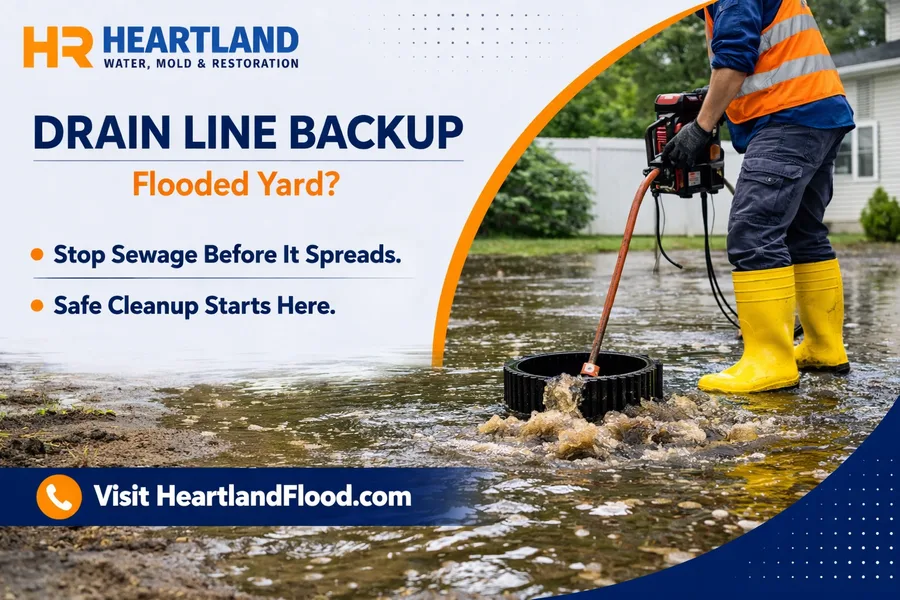
- Keep people and pets away from the area, and rope it off until cleanup begins.
- Stop using water inside the house. Showers, laundry, and dishwashers all add more wastewater to a system that is already backed up.
- Avoid walking through the affected area, since contaminated water tracks easily on shoes and paws.
- Ventilate if the backup is near the house by opening windows on the far side and running exhaust fans.
- Photograph the damage before cleanup starts, including the pooling, the source, and any nearby structures.
- Call your insurance provider and a restoration professional, since many policies require prompt reporting.
Do not try to clear the blockage yourself with a rod while there is standing sewage in the yard, disturbing the clog can release more contaminated water under pressure. And do not use a household shop vacuum or pressure washer on sewage without proper containment; both can aerosolize bacteria into a fine mist that travels well beyond the original spill.
DIY Cleanup vs. Calling a Professional: Where Is the Line?
A small splash of contaminated water on a hard, non-porous surface like a section of patio or driveway can sometimes be cleaned safely by a homeowner wearing rubber gloves, boots, and eye protection, using a diluted bleach solution followed by a thorough rinse disposed of properly.
Anything beyond that calls for professional help. If sewage has saturated soil, grass, mulch, or reached the foundation of a structure, the contamination runs deeper than a surface wipe-down can fix. Soil holds onto bacteria far longer than concrete does, and a partial cleanup can leave a hidden health hazard that resurfaces with the next heavy rain. If sewage has reached your home, our guide to long-term basement sewage contamination explains why certified extraction matters.
How Professional Restoration Crews Handle Sewage Safely
A trained crew approaches a yard sewage backup differently than a homeowner would. It typically starts with full personal protective equipment, including coveralls, gloves, and respirators rated for biological hazards, followed by containing the affected area to stop further spread. From there, the team extracts standing water using equipment built for contaminated water, removes saturated soil or debris where needed, and applies EPA-registered disinfectants before the area is considered safe again.
This is the kind of job where experience matters as much as equipment. Heartland Restoration crews are trained specifically for Category 3 water events, which means the goal is not just visible cleanup, it is confirming, through moisture readings and follow-up checks, that the property is genuinely safe to use again.
Preventing Future Drain Line Backups
- Schedule a camera inspection of your sewer line every few years, especially with mature trees nearby or a home built before the 1980s.
- Install a backwater valve so wastewater flows out normally but cannot push back in when the municipal line backs up.
- Be mindful of what goes down the drain, since grease, wipes, and flushable products are common culprits behind slow, building blockages.
- Watch for early warning signs like slow drains or gurgling toilets, and address them before they turn into a yard-level event.
When to Call a Restoration Company Right Away
Some situations do not leave room for a wait-and-see approach: sewage that has reached your home foundation, contamination near a well or a vegetable garden, backups affecting more than one area of the yard, or any standing sewage that has been sitting for more than a few hours. A fast response limits how far contamination spreads and how much it ultimately costs to put right. Heartland Restoration offers 24/7 emergency dispatch across the Kansas City metro, including Overland Park, Olathe, Lenexa, and Shawnee, with adjuster-ready claim documentation you can access. Call (913) 213-3686 or request an assessment any hour.
Last updated July 16, 2026
Frequently Asked Questions
Is a sewage backup in my yard covered by homeowners insurance?
Many policies cover sudden sewer backups, though some require a separate sewer or drain backup endorsement. Check your policy or ask your provider before assuming you are covered, and document the backup with photos as soon as you spot it so your claim is well supported.
How long does professional sewage cleanup typically take?
A contained yard backup can often be resolved in a day or two, while larger events involving saturated soil removal or structural contamination may take longer. A crew confirms the area is safe with follow-up checks rather than stopping at visible cleanup.
Can I pressure wash sewage off my patio myself?
It is not recommended. Pressure washing can aerosolize bacteria and spread contamination well beyond the original spill. A small splash on a hard, non-porous surface can sometimes be handled with gloves and a diluted disinfectant, but anything larger is best left to a professional with proper containment.
What is the difference between a sewer line backup and a septic system backup?
A sewer backup involves the municipal line your home connects to, while a septic backup originates from an on-property tank and drain field. The causes and the fixes differ, so identifying which system you have helps a technician find the source faster.
How can I tell if tree roots caused my backup?
A camera inspection of the line is the most reliable way to confirm root intrusion. Recurring slow drains near mature trees, especially in older neighborhoods with clay or cast-iron pipe, are a strong early clue that roots have found their way in.
Is a yard sewage backup dangerous for pets?
Yes. Pets can ingest bacteria while sniffing or walking through contaminated areas, then track it indoors on their paws. Keep children and pets away from the affected area until cleanup is fully complete.
What is a backwater valve, and do I need one?
A backwater valve lets wastewater flow out of your home normally but closes automatically if the municipal line backs up, keeping sewage from pushing onto your property. It is a smart addition for any home that has experienced a backup before or sits at a low point on the block.
Sources & References
- ANSI/IICRC S500 Standard for Professional Water Damage Restoration - IICRC (Institute of Inspection, Cleaning and Restoration Certification)
- Mold, Dampness, and Cleanup After Water Damage - Centers for Disease Control and Prevention
- A Brief Guide to Mold, Moisture and Your Home - U.S. Environmental Protection Agency
Comments
No comments yet.