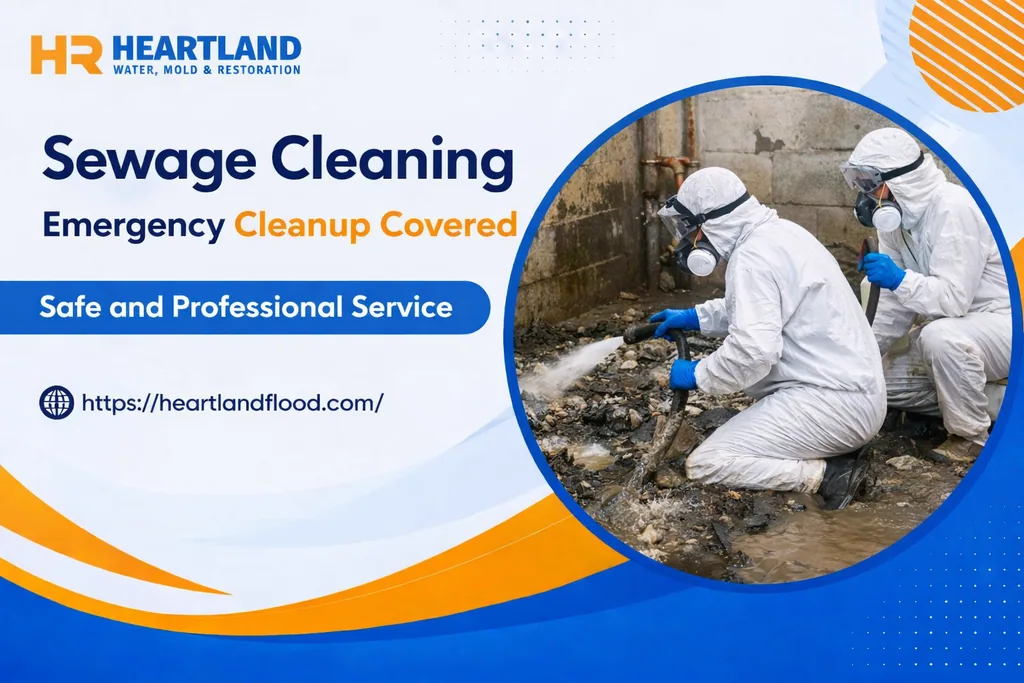
A sewer backup can quickly become a serious health and property concern. Contaminated water may contain harmful bacteria, viruses, and other pollutants that spread through flooring, walls, and belongings. Without proper cleanup, sewage damage can also lead to long-term moisture problems and mold growth.
At Heartland Restoration Services, sewer backup cleaning services are handled using professional-grade extraction equipment, sanitization methods, and structural drying techniques designed to restore safe conditions as quickly as possible.
In Kansas City, heavy rainfall, aging sewer systems, and plumbing failures are some of the most common causes of sewage-related flooding in homes and commercial properties. Call (913) 213-3686 for immediate 24/7 emergency response.
Why Water Damage Is Common in Kansas City
Water damage Kansas City property owners experience is often linked to severe weather conditions, plumbing issues, and drainage problems. Even a small leak can spread moisture behind walls and beneath flooring if not addressed quickly.
Common Causes of Water Damage
- Heavy storms and flash flooding
- Burst or leaking pipes
- Sewer line backups
- Appliance overflows
- Poor foundation drainage
- Roof and gutter leaks
Heartland Restoration Services provides water extraction, drying, and restoration services for residential and commercial properties affected by unexpected water damage across the Kansas City area - including Lenexa, Overland Park, Olathe, and Shawnee.
Why Immediate Emergency Water Damage Repair Matters
When flooding or sewage contamination occurs, every hour matters. Moisture can quickly spread into drywall, insulation, wood flooring, and furniture, increasing the risk of mold growth and structural damage.
Emergency water damage repair KC services focus on minimizing damage through rapid response and professional drying solutions. Mold can begin growing within 24 to 48 hours - fast action is critical.
Emergency Restoration Services Include
- Water extraction
- Drying and dehumidification
- Moisture inspection
- Sanitization and odor removal
- Mold prevention treatments
- Structural drying and repairs
The Sewer Backup Cleanup and Restoration Process
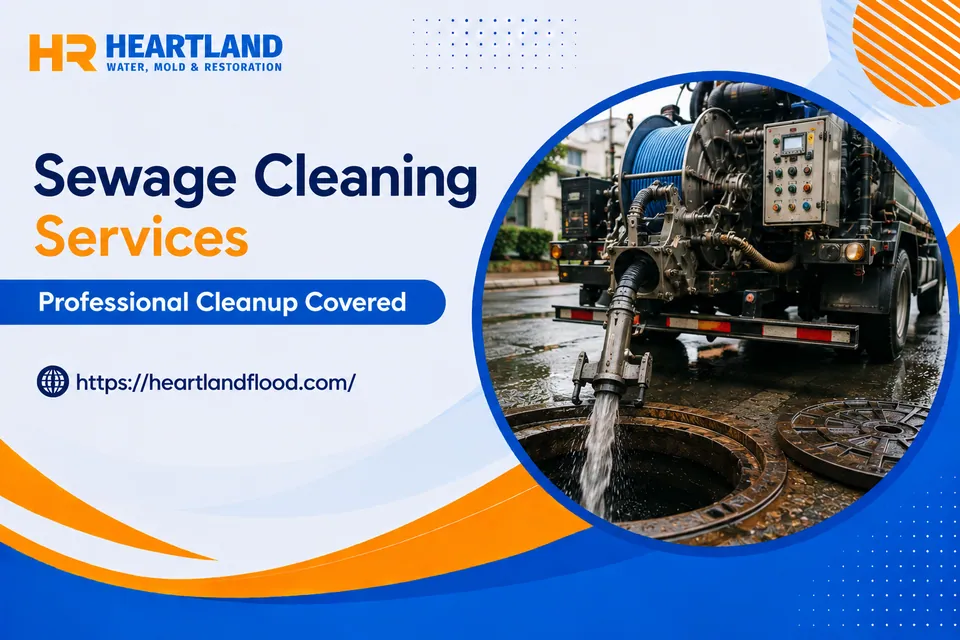
Professional sewer backup cleaning requires more than basic water removal. Proper restoration involves a detailed process to safely clean, disinfect, and restore affected areas.
Inspection and Damage Assessment
Technicians inspect the affected areas to determine contamination levels and moisture penetration using professional moisture detection equipment.
Containment of Affected Areas
Containment barriers are used to prevent contaminated water and bacteria from spreading throughout the property.
Water and Sewage Removal
Standing water, sewage, and damaged materials are removed using industrial extraction equipment rated for Category 3 contamination.
Cleaning and Sanitization
All impacted surfaces are cleaned and disinfected using professional antimicrobial treatments to eliminate pathogens and prevent secondary contamination.
Drying and Dehumidification
Industrial air movers and dehumidifiers help eliminate hidden moisture and reduce mold risks throughout the structure.
Restoration and Repairs
Depending on the severity of the damage, flooring, drywall, insulation, and other structural materials may be repaired or replaced to return the property to pre-loss condition.
Kansas City's Ongoing Water Damage Challenges
Kansas City properties often face increased flooding and sewer backup risks during periods of heavy rainfall. Aging infrastructure and storm-related drainage problems can place additional stress on sewer systems, especially in lower-level areas and basements throughout Johnson County, KS and Jackson County, MO.
Humidity can also contribute to hidden moisture problems after flooding incidents. Without proper drying, moisture trapped behind walls or beneath flooring may lead to mold growth within 24 to 48 hours. Properties in Overland Park, Blue Springs, and Lee's Summit have all experienced these seasonal flooding challenges.
Heartland Restoration Services helps property owners across Kansas City respond quickly to sewer backups, flooding, and unexpected water emergencies with professional cleanup and restoration services within 60 minutes of your call.
Choosing a Professional Restoration Team
Selecting an experienced restoration provider can help simplify the recovery process after water or sewage damage. Look for IICRC-certified technicians with local experience in Kansas City metro properties.
Important Factors to Consider
- 24/7 emergency response availability
- IICRC-certified restoration technicians
- Advanced drying and extraction equipment
- Experience handling sewage contamination (Category 3 water)
- Clear communication during restoration
- Strong local reputation and verified customer reviews
Heartland Restoration works directly with homeowner insurance companies, providing the moisture readings and damage reports adjusters require. Learn more about our sewage cleanup services or our full water damage restoration process.
Frequently Asked Questions
What should I do before sewer backup cleaning services arrive?
If it is safe to do so, avoid contact with contaminated water and turn off electricity in affected areas. Professional sewer backup cleaning services can then begin water extraction, sanitization, and drying to reduce further damage.
How quickly should I schedule emergency water damage repair KC services?
Emergency water damage repair KC services should be scheduled immediately after flooding or sewage damage occurs. Fast response helps prevent mold growth, structural damage, and additional restoration costs. Call Heartland at (913) 213-3686 for a 60-minute guaranteed response.
What causes water damage Kansas City homeowners experience most often?
Water damage Kansas City properties commonly face is caused by heavy storms, burst pipes, sewer backups, appliance leaks, and poor drainage around foundations.
Are professional sewer backup cleaning services necessary after minor sewage flooding?
Yes. Even small sewer backups can contain harmful bacteria and contaminants classified as Category 3 water. Professional sewer backup cleaning services help ensure the affected areas are properly disinfected and safely restored.
What is included in emergency water damage repair KC services?
Emergency water damage repair KC services often include water extraction, structural drying, dehumidification, moisture inspection, sanitization, odor removal, and restoration repairs.
How long does water damage restoration usually take?
The timeline depends on the severity of the damage. Smaller water damage Kansas City restoration projects may take a few days, while major flooding or sewage cleanup can require additional drying and repairs spanning one to two weeks.

Comments
No comments yet.